Designing for Manufacturability: What Furniture Drawings Teach Designers
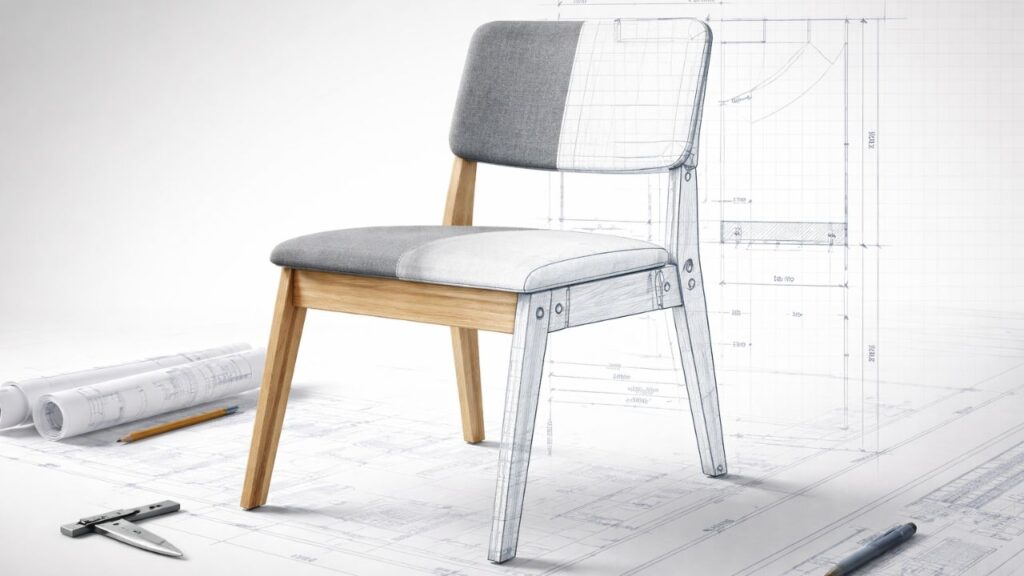
In furniture design, the gap between a strong concept and a successful product is often wider than it looks. Many beautiful ideas don’t fail because they lack creativity—they fail because they aren’t designed with real manufacturing constraints in mind.
Designing for Manufacturability (DFM) is the discipline of shaping design decisions so they can be produced efficiently, cost-effectively, and consistently at scale. In furniture, DFM becomes visible through drawings. Once a concept is translated into manufacturing documentation, the truth comes out: what’s clear, what’s missing, what’s impractical, and what’s expensive to build.
This is why detailed CAD documentation—and professional Furniture CAD Drawing Services—matters. It bridges the space between design ambition and manufacturing execution by turning intent into buildable instructions.
Understanding Designing for Manufacturability (DFM)
DFM in the Context of Furniture Design
DFM means designing with production realities in mind from the earliest stages. In furniture, this requires balancing aesthetics with:
- Material behavior (including movement and stability)
- Joinery logic and structural integrity
- Machine and tooling limitations
- Assembly sequencing and labor efficiency
- Finishing processes and tolerance impact
Unlike conceptual design, DFM asks practical questions early, such as:
- Can this be built repeatedly with consistent quality?
- Do the materials match the intended process and supply chain?
- Does the joinery align with standard tooling and assembly methods?
- Are tolerances realistic once finishing and movement are considered?
Early decisions around thickness, curvature, edges, joinery, and structure cascade into cost, lead times, and defect rates later.
Why Early Decisions Matter
Late-stage design changes are expensive—especially after prototyping, tooling, or component sourcing begins. DFM uses drawings as an early “reality check,” helping designers find manufacturability issues before they become production problems.
Role of Furniture Drawings in Manufacturing
Drawings Are the Language of Production
Furniture manufacturing runs on clarity. Drawings don’t just show what a piece looks like—they explain how it is built.
A production-ready drawing set typically includes:
- Accurate dimensions with defined reference points
- Material specifications (type, grade, thickness, grain direction where relevant)
- Joinery details and assembly logic
- Tolerances for fit, movement, and finish build-up
- Hardware callouts with placement and fastening methods
- Notes that remove ambiguity (not vague descriptions)
Without this, manufacturers must interpret intent—and interpretation usually leads to unwanted variation.
From Concept to Production-Ready Furniture Drawings
When a design becomes a drawing set, gaps show up fast:
- Joints that can’t be fabricated the way they’re drawn
- Conflicting dimensions across views
- Curves that require special tooling or create waste
- Transitions between materials that don’t allow movement or fastening
- Assemblies with no practical sequence (can’t be clamped, screwed, or accessed)
In other words: drawings expose where the concept didn’t account for the factory floor.
How Furniture CAD Drawing Services Improve Design Outcomes
Professional CAD documentation turns drawings into an active design tool—not just a final deliverable.
What Furniture CAD Drawing Services contribute:
- Precision and consistency: Parametric models keep dimensions aligned across parts and revisions
- Fewer errors: Clear shop drawings reduce misinterpretation and rework
- Faster prototyping: Better documentation shortens the sampling cycle
- Material optimization: Component rationalization and nesting reduce waste
- Smoother handoff: Clear CAD drawings streamline communication between design, engineering, and production
Used correctly, CAD doesn’t just “document” the design—it helps refine it.
Supporting DFM Without Limiting Creativity
DFM isn’t creativity’s enemy. It’s a filter that strengthens design choices. When boundaries are clear early, designers can push aesthetics in ways that remain feasible—without relying on costly trial-and-error later.
This is where broader CAD Drawing Services can also play a role, especially when drawings must align with manufacturing systems, CNC workflows, or multi-part product collections.
Key Lessons Designers Learn from Manufacturing-Ready Drawings
1) Simplicity Often Wins
Complex geometry and lots of custom parts may look impressive but often perform poorly in production. Drawings frequently reveal opportunities to simplify shapes, reduce part count, and standardize components—without losing visual impact.
2) Standardization Is a Strategic Advantage
Manufacturing-ready drawings make patterns obvious:
- repeatable leg profiles
- shared panel thicknesses
- consistent hardware choices
- modular rails or supports across a collection
Intentional standardization improves consistency and lowers cost.
3) Tooling and Assembly Must Be Designed In
Drawings force practical questions:
- Can a CNC tool reach that internal corner?
- Is there clearance for clamps and fasteners?
- Does the assembly order make physical sense?
Small adjustments—like changing a radius, shifting a pocket, or revising a joint—can dramatically improve manufacturability.
Common Design Mistakes Revealed by Poor Drawings
Missing or Incorrect Tolerances
Wood moves. Finishes add thickness. Fabrication varies slightly. Without tolerances, parts that “work on paper” fail during assembly, creating rework and quality issues.
Unrealistic Joinery
Conceptual joints can look elegant but be weak, inefficient, or impossible at scale. CAD forces exact geometry, which quickly exposes what won’t actually build the way it was imagined.
Unclear Specifications
Vague notes like “solid wood” or “smooth finish” don’t support production. Drawings must specify material type, thickness, finish system, hardware model, and measurable requirements.
Collaboration Between Designers and Manufacturers
Drawings as a Shared Reference Point
CAD drawings create a single source of truth. Designers, engineers, and manufacturers can review the same data, reducing miscommunication and assumption-based decisions.
Iteration Through Feedback Loops
Once drawings are reviewed, manufacturers often suggest:
- alternate joints
- more available materials
- simpler assembly sequences
- stronger tolerances and fastening strategies
CAD workflows make it easier to incorporate feedback through controlled revisions—before anything is cut or ordered.
Aligning Prototyping and Production
When drawings match manufacturing intent, prototypes become true previews of production—not expensive experiments. That alignment reduces delays, improves quality, and builds confidence across the supply chain.
Conclusion
Designers who understand manufacturability create better furniture—not because they compromise, but because they design with intention. Furniture drawings are where that understanding becomes visible. They reveal the real implications of creative choices and guide teams toward solutions that balance form, function, cost, and feasibility.
When integrated early, Furniture CAD Drawing Services and broader CAD Drawing Services help translate design intent into clear, production-ready instructions—resulting in fewer surprises, stronger collaboration, and smoother product launches.