Why Foam Beams Are Useful for Beginner Gymnastics Practice
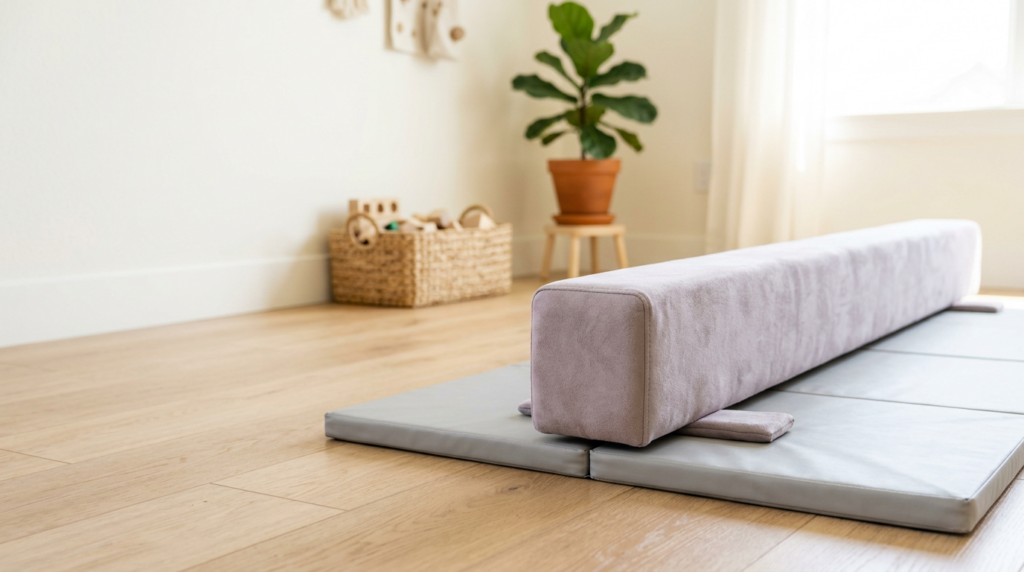
Beginner gymnastics is often about learning control before complexity. Young athletes usually need time to build balance, coordination and body awareness before they attempt more advanced skills. That is why low-risk training tools can play such an important role in early development. In many home and beginner settings, a Gymnastic beam made for introductory practice can help support steady, skill-based progress.
What makes foam beams suitable for beginners
Foam beams are often used to introduce beam-style movement in a more approachable way. Because they sit low to the ground, they can reduce some of the hesitation beginners feel when stepping onto a narrow surface. That lower profile can make it easier for children to focus on technique rather than worrying about height.
This matters because early training is not about performing difficult routines. It is about learning how to move with control. For many beginners, confidence improves when the environment feels manageable.
A foam beam can also support repetition. When children feel comfortable returning to the same drill again and again, they are more likely to develop stable movement habits.
Building body awareness through simple drills
Body awareness is a major part of gymnastics. It helps athletes understand posture, alignment and where their weight is shifting during movement. Foam beam drills can support this by slowing movements down and encouraging deliberate control.
Basic exercises such as straight walks, side steps, knee lifts and brief balances on one foot are often enough to challenge a beginner. These tasks teach the gymnast to pay attention to arm placement, foot positioning and trunk stability.
Over time, that awareness becomes more automatic. Instead of thinking about every step individually, the athlete starts to move with greater consistency. That is an important milestone in early training.
Why low-height practice can improve confidence
Confidence is easier to build when the task feels achievable. A low beam can create that feeling without removing the challenge entirely. The gymnast still has to stay centred, maintain posture and control their movements, but the setup may feel less intimidating than a raised apparatus.
This can be particularly helpful for younger children or first-time learners. They often respond well to equipment that allows them to experiment without too much pressure. Even a short beam session can become a positive experience when the goal is simple and success feels within reach.
Confidence built this way is useful because it can transfer into other areas of gymnastics. When a child trusts their ability to balance, they may approach floor work and transitions with greater calm.
Foam beam training at home
Home practice can be effective when it reinforces skills already being learned in a suitable training environment. For many families, the goal is not to replace coached instruction but to create more opportunities for repetition and familiar movement patterns.
A foam beam can fit well into this kind of routine. It allows children to revisit simple exercises such as walking patterns, holds and controlled step-downs. Short sessions are usually enough, especially when they are done regularly and with attention to form.
The training area still matters. Even low equipment should be used on a clear surface with appropriate supervision. A calm, uncluttered space helps children stay focused and move safely.
Choosing drills that match the athlete’s level
Not every beam exercise suits every beginner. The most useful drills are usually the ones that match the gymnast’s current ability and can be performed consistently with good form. Starting too far ahead often leads to frustration or poor technique.
For true beginners, walking drills and still balances are usually plenty. Once those are steady, athletes may move on to small leg lifts, gentle turns or controlled poses. The key is to progress through stable movement patterns rather than rushing into harder tasks.
This approach supports better learning because each step builds on the last one. It also makes practice feel more purposeful.
A practical tool for early skill development
Foam beams are not simply a softer version of standard beam equipment. They serve a clear purpose in beginner development by making balance practice more approachable, repeatable and structured. That can be especially valuable in the early stages, when confidence and technique are still taking shape.
Used appropriately, they help gymnasts work on posture, coordination and body control in a format that supports gradual improvement. For children learning the basics, that kind of accessible practice can make a meaningful difference.
In gymnastics, strong foundations tend to come from simple skills done well. Foam beam work fits naturally into that process.