What Hernia Surgery in Brisbane Actually Does for Your Health
A lot of people first hear the phrase “watch and wait” from their GP—and for some small, minimally symptomatic hernias, that can be a reasonable plan. But what often gets missed is the bigger picture: most hernias don’t heal by themselves. Watchful waiting isn’t “it might get better.” It’s “we’ll monitor it until symptoms or risk justify repair.” Australian guidance notes watchful waiting can be used for some minimally symptomatic inguinal hernias, but also that many people eventually proceed to surgery over time.
That’s why getting hernia surgery in Brisbane earlier (when appropriate) isn’t automatically “rushing into an operation.” For many patients, it’s about fixing a problem while the repair is still straightforward and before the hernia becomes more limiting, painful, or complicated.
The Sneaky Problem With “Watchful Waiting”
Watchful waiting exists for a reason: surgery has risks, and not every hernia needs immediate repair. But it’s important to understand what watchful waiting actually means in real life:
- A hernia usually persists because it’s a defect/weakness in the abdominal wall.
- Over time, symptoms may change, and people often cross over to surgery due to increased discomfort or impact on daily life.
Also, not all hernias are equal. Some types—like femoral hernias—carry a higher risk of complications and are generally treated more urgently than uncomplicated inguinal hernias.
Red-flag symptoms (don’t “watch and wait” these)
Seek urgent medical care if you have severe pain, a hernia bulge you can’t reduce, vomiting, or signs of bowel obstruction/strangulation—these situations can require urgent repair.
What Surgery Actually Changes (Beyond “Fixing a Bulge”)
At a basic level, surgery aims to:
- Return protruding tissue to where it belongs
- Reinforce the weak area so it’s less likely to pop out again
- Reduce symptoms (pain, pressure, pulling) and help you move more confidently
Whether that’s done with an open approach or laparoscopic (keyhole) approach depends on the hernia type, your anatomy, your health, and the surgeon’s expertise.
Why Mesh Choice Matters (And Why You Should Ask About It)
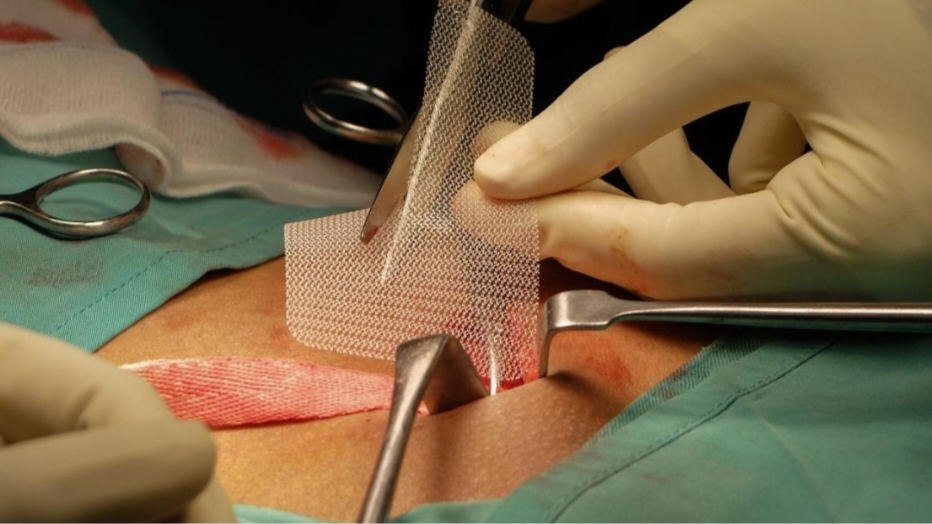
Many modern hernia repairs use mesh reinforcement. But “mesh” isn’t one uniform product—there are different materials, weights, pore sizes, and designs.
Research comparing lightweight vs heavyweight polypropylene meshes shows that mesh characteristics can influence outcomes such as inflammation, stiffness, and chronic discomfort—though the best choice depends on the clinical scenario and surgical technique.
For complex cases (especially contaminated fields), mesh decisions get even more nuanced. Historically, biologic mesh was often considered in contaminated situations, but more recent research and reviews discuss scenarios where certain synthetic meshes may perform well too—so it’s not a one-size-fits-all rule.
What to ask your surgeon:
- What mesh type/material are you planning to use, and why?
- Is the plan different if you have infection risk or prior surgery?
- What are the expected trade-offs (comfort, recurrence risk, recovery)?
(You’re not being difficult—these are normal, fair questions.)
Laparoscopic vs Open: What “Keyhole” Really Means
People often focus on smaller scars, but the bigger differences are internal.
Potential advantages of laparoscopic repair (in the right patient)
- Surgeons may be able to inspect the other side and identify an “occult” (hidden) contralateral hernia during laparoscopic repair. A systematic review reported an incidence of occult contralateral inguinal hernias around 14.6% (range varies across studies).
- In some settings, laparoscopic approaches are associated with faster return to normal activities and lower wound infection risk, while recurrence rates can be similar depending on the hernia type and study.
Important reality
There isn’t a universal “best.” High-quality evidence often shows both approaches can be effective, and the “best” option depends on your hernia (single vs bilateral, primary vs recurrent), your health, and the surgeon’s experience.
Recovery: What Many People Don’t Get Told Clearly
A common frustration after hernia repair is that people feel “okay” before they are actually ready to resume everything. It’s normal for recovery to come in phases:
- Early discomfort and limited movement
- A period where swelling/tightness makes you feel worse before you feel better
- Gradual return to walking/driving/work (varies a lot by job and hernia type)
- Core strength and confidence can take longer to fully rebuild than people expect
Your surgeon will usually provide activity guidance tailored to your repair type—follow that over generic internet timelines.
How to Choose a Surgeon in Brisbane (Practical Signals)
Most general surgeons can repair hernias, but experience and focus can matter—especially for recurrent or complex abdominal wall problems.
A useful starting point is checking whether your surgeon is involved with a specialist hernia community such as the ANZ Hernia Society (a RACS-ratified society of surgeons with a special interest in hernia surgery).
Questions worth asking:
- How many hernia repairs do you do each month?
- Do you regularly do laparoscopic repairs (if that’s being offered)?
- What’s your approach for recurrent or complex hernias?
- What are your typical complication and recurrence rates for this procedure?
Membership alone doesn’t guarantee outcomes—but it can be one indicator of ongoing interest, standards, and training.
The Insurance Detail That Catches People Out (Australia)
If you’re using private health insurance, be aware of waiting periods—especially for pre-existing conditions when you’re new to a level of cover or upgrading. Australian rules allow up to 12 months waiting for pre-existing conditions in hospital cover.
A key point: insurers may assess whether signs or symptoms existed in the months before you became insured/updated your cover (even if you weren’t formally diagnosed yet).
Best move: read your policy details and ask the fund directly in writing if you’re unsure.
Conclusion
Hernia repair is common—but your result depends on details people often don’t hear upfront: timing, technique, mesh choice, and surgeon experience. Watchful waiting can be appropriate for some hernias, but it should be understood as monitoring—not a cure—and many patients eventually opt for repair over time.