How CO₂ Laser Engraving Machines Work?
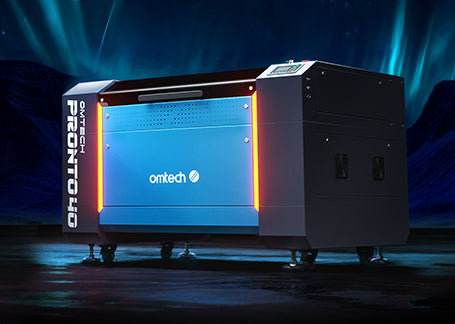
Laser technology has transformed how we design, decorate, and manufacture—from custom gifts and signage to industrial prototypes and fine art. Among the most versatile and widely used types of laser systems is the CO₂ laser. Known for its power, precision, and ability to work with a broad range of materials, the CO₂ laser cutter has become a staple in both workshops and professional settings.
But how exactly does it work? What makes it different from other laser technologies? And which model should you choose for your needs?
This in-depth guide explores everything you need to know about CO₂ laser engraving machines—including their working principles, types, and ideal applications.
What Is a CO₂ Laser Engraving Machine?
A CO₂ laser (short for carbon dioxide laser) is a type of gas laser that uses a carbon dioxide gas mixture to produce a powerful, concentrated beam of light. This beam can cut, engrave, mark or etch various non-metal materials with extreme precision.
Invented in the 1960s, CO₂ lasers have become a go-to tool in industries like signage, packaging, manufacturing, interior design, fashion, and education, just to name a few. They are especially popular for laser engraving on wood, acrylic, leather, paper, rubber, fabric, and glass.
The key advantage of a CO₂ laser cutter is its ability to deliver high-speed, high-quality results on organic or non-metal materials, all while being cost-effective and relatively easy to operate.
How Does a CO₂ Laser Work?
The working principle of a CO₂ laser relies on exciting gas molecules within a sealed tube. Here’s a simplified breakdown of the process:
1. Gas Excitation
The laser tube is filled with a mixture of gases—mainly carbon dioxide (CO₂), nitrogen, hydrogen, and helium. When high voltage electricity is applied, the CO₂ molecules become energised, causing them to emit light in the infrared wavelength (typically around 10.6 microns).
2. Beam Generation and Direction
This infrared light forms the laser beam, which is then reflected and directed by a series of mirrors towards the focusing lens at the end of the laser head. The lens concentrates the beam into a fine point—just fractions of a millimetre wide.
3. Cutting or Engraving
The focused beam hits the surface of the material. The intense energy causes instantaneous heating, melting or vaporisation, depending on the material type and laser settings (power, speed, frequency).
- At high power and low speed, the laser cuts through the material.
- At low power and higher speed, it engraves by removing the top layer of the surface without cutting through.
4. Precision Control
The laser head moves according to a vector path defined by software (such as LightBurn or RDWorks), allowing incredibly detailed designs to be cut or engraved with pinpoint accuracy.
Key Components of a CO₂ Laser Cutter
To fully understand how it works, it helps to know the essential parts of a CO₂ laser machine:
- Laser Tube – Contains the CO₂ gas that generates the laser beam.
- Power Supply – Provides electricity to energise the laser tube.
- Control Board & Software – Converts your digital design into machine instructions (G-code).
- Motors & Rails – Move the laser head smoothly in X and Y axes.
- Focusing Lens – Concentrates the beam into a fine point.
- Mirror Assemblies – Reflect and guide the beam along the right path.
- Cooling System – Usually water-cooled to prevent overheating of the laser tube.
- Exhaust Fan – Removes fumes and particles from the cutting area.
Different Types of CO₂ Laser Machines
Not all laser cutters are created equal. CO₂ lasers come in various sizes, power levels and configurations, depending on the intended use.
Desktop CO₂ Laser Engravers (40W–60W)
- Best for: Beginners, hobbyists, educators, small craft businesses.
- Materials: Wood, acrylic, paper, fabric, leather.
- Advantages: Compact, affordable, and great for small-scale projects
Mid-Range CO₂ Laser Cutters (60W–100W)
- Best for: Professional designers, workshops, SMEs.
- Materials: Thicker wood, acrylic up to 10–15mm, glass, rubber, coated metals.
- Advantages: More power, larger working area, faster production.
Industrial CO₂ Laser Systems (100W–150W and beyond)
- Best for: Manufacturing, large-scale signage, batch production.
- Materials: Higher-density or thicker materials, multi-layer projects.
- Advantages: Higher speed, deeper cuts, continuous operation.
The right model depends on your project volume, material types, budget, and workspace.
Common Applications of CO₂ Laser Engraving Machines
Thanks to their flexibility, CO₂ laser cutters are used in dozens of industries and creative settings. Here are some popular applications:
Custom Product Manufacturing
From personalised gifts to branded merchandise, CO₂ lasers can engrave names, logos, or designs onto wood, acrylic, and leather products.
Arts and Crafts
Makers and crafters use CO₂ laser machines to create intricate paper cutouts, wooden puzzles, jewellery, and home décor.
Education and STEM Learning
Schools, TAFEs, and universities often use CO₂ laser engravers to teach digital design, prototyping, and manufacturing principles.
Interior Design
Etched glass, engraved wall art, signage, and stencils are common in both home and commercial spaces.
Packaging and Labelling
Custom-cut boxes, engraved tags, and promotional packaging materials are quick to produce with a CO₂ laser cutter.

Why Choose a CO₂ Laser Cutter?
Here are a few reasons why the CO₂ laser remains a preferred option for so many creators:
- Versatility – Works on a wide range of non-metal materials.
- High Detail – Produces clean, accurate cuts and engravings.
- Cost-Effective – Affordable operation compared to other laser types.
- Scalability – From single projects to mass production.
- Low Maintenance – Easy to maintain with minimal running costs.