Inside a Modern Metal Casting Factory: From Design Simulation to Finished Product
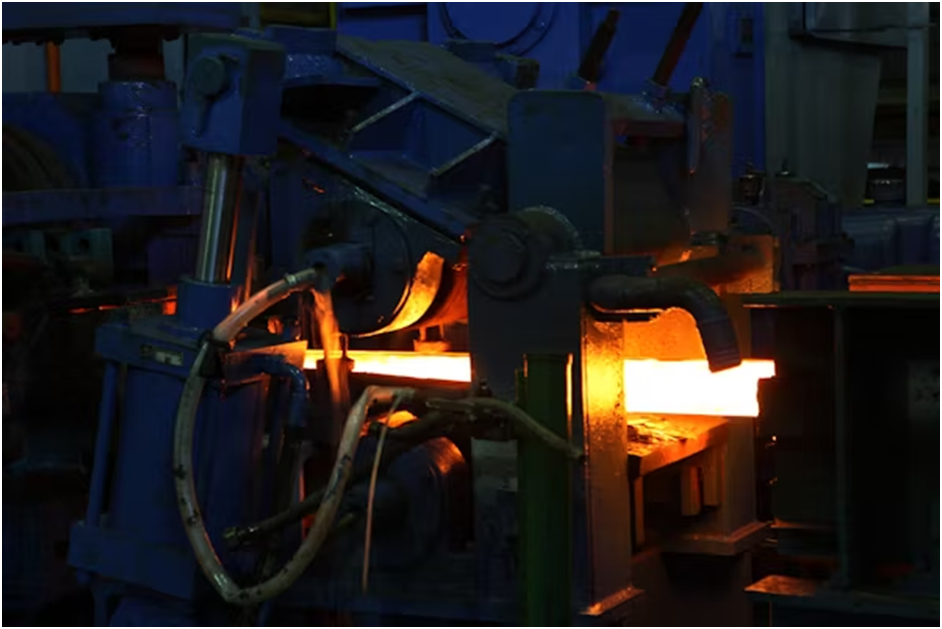
In the competitive industrial landscape, a company’s success depends on the ability to produce accurate and consistent intricate metal elements. Sectors like aerospace, automotive, construction, and heavy machinery demand components that not only comply with performance standards but also maintain tight tolerances throughout mass production. This is where precision casting manufacturers come in, merging fundamental engineering with modern technologies in a metal casting factory.
In this article, we walk the reader through the process of modern casting facilities, starting from computer-aided design and simulation, and finishing with advanced precision machining, inspection, and delivery. This article is targeted to B2B buyers and partners with the aim to appreciate the reliability and complexity of modern casting operations.
Digital Design and Engineering: The Foundation of Precision
For modern metal casting facilities, the first step is digital design and engineering. Prior to making any molds, the engineers first utilize CAD and CAE to draft the 3D model of the part. This step is crucial, as it permits designers to visualize and analyze complex geometries, and gives them the opportunity to correct any potential discrepancies in dimensions before the costly stage of actual production.
Next, the engineers evaluate the design using simulation software. Their work centers on using computational fluid dynamics (CFD) to analyze the design’s metal molds and simulate the flow of molten metal and the subsequent solidification and cooling processes. This analysis identifies critical problems early on, assessing the risks of metal turbulence, void formation, and uneven cooling that could result in costly detrimental defects.
A precision casting manufacturer implements this risk mitigation approach for design refinements before production to cut costs and save time. Adjustments to the initial design using simulation to optimize the geometry of the mold and the properties of the casting materials significantly reduce the trial-and-error phase. The early adjustments and refinements made for design precision leads to better casting reliability and performance for the manufacturer’s end industrial users.
Pattern and Mold Making: Transforming Designs Into Reality
After the design stage completes, patterns and molds — the tools that define each casting — must be constructed. In a metal casting factory and precision casting manufacturer, technological advancements have changed the process of mold-making.
While it is true that sand and ceramic molds are still being used, the design and manufacture of these molds is being done using CNC and even 3D printers to achieve more precise tolerances. Additive manufacturing allows more sophisticated rapid prototyping and the design of intricate internal geometries that are impossible to make conventionally.
In investment casting, which is a widely used method of precision casting, the wax patterns are made to the precise measurements of the final component. These assembled wax patterns are organized into a “tree” and are covered in ceramic slurry to create the mold shell. The wax is then melted from the shell to create the void that will be filled with molten metal.
The accuracy of the final product hinges on how precise the mold is. That is why the fabrication of molds is done in an environment with controlled humidity, temperature, and cleanliness. Every mold file is verified in its dimensions and accuracy, within fractions of a millimeter, before the casting phase can begin.
Melting and Casting: The Heart of the Operation
Where engineering precision and metallurgical science intersect is in the melting and pouring phase. In the foundry, high efficiency furnaces are used to melt ss, aluminum, and even titanium. For the melting process, precise temperatures need to be maintained to ensure that the metallic liquid’s chemical components and balance are in equilibrium.
The molten metal is degassed and filtered to remove impurities and air pockets that can form and weaken the casting. The metal is then poured into pre-heated molds that ensure uniform filling and solidification, and controlled temperatures. Automated pouring systems, with precision down to design specifications, control temperature and pressure to meet specific targets for strength and durability.Furthermore, all cooling processes are meticulously orchestrated. Controlled cooling avoids the creation and defects of stress and distortion. Depending on the alloy, certain heat treatments follow, including annealing and quenching, to enhance the alloy’s hardness and other performance characteristics.
Here is the centerpiece of a metal casting factory, where molten metal is being turned and precision-engineered to repeatable standards into components, which are now ready for the subsequent machining and finishing processes.
Machining, Finishing, and Surface Treatment
After cooling, the casting is removed from its mold and goes through a set of processes to remove the final surfaces and achieve the desired dimensions. These processes include trimming, CNC machining, and grinding.
Casting facilities of today have robotic automation and computer-controlled machining centers to facilitate these processes, which minimizes the element of human error. The system of automation in place guarantees consistency, and this holds true even for the high-volume production runs.
After machining, surface treatments are performed to improve surface characteristics, including corrosion resistance, appearance, and overall performance. Depending on the specified technical requirements of the customer, various methods such as polishing, anodizing, shot blasting, and coating are used.
For components with high precision requirements, such as those used in aerospace or automotive engineering, dimensional precision check with Coordinate Measuring Machines (CMM) answers the questions of how correctly and how well the finished component matches the specifications. CMM technology determines the position of the finished component within the 3D space and compares the measurements with the digitally stored model, identifying even the slightest differences. If differences are found, the subsequent processes are adjusted using the data to maintain a closed loop system of quality control.
Quality Control and Continuous Improvement
For a precision casting manufacturer, the last stage of a process and the most important one is the quality control system. Systematic control of quality on every component before delivery is necessary and customer specifications should always be met. Control of quality does and should not wait until the end of a stage. It should begin with the raw material and proceed through production and to the end of the stage, thereby ensuring every component is traceable with a record.
In NDT, control of quality using destructive methods, such as dye penetrant inspection or X-ray inspection, ultrasonic testing, and all other methods of NDT, is the control of quality by ensuring the part is free of defects, such as voids, cracks, and inclusions. For quality that is critical and does not allow for compromise, the parts must maintain structural reliability.
Modern practices in metal casting rely on the “continuous improvement” principle. Using data and Statistical Process Control (SPC), the factories automate the control of quality and most of the processes in production by achieving the goal of real-time control of set production metrics. Quality that is stable and repetitive is guaranteed by the elimination of “features” that are found after the production and by the comprehensive control of the quality in all set production metrics.
Lean manufacturing is practiced to minimize waste, maximize productivity, and optimize the flow of activities. The use of automation, robotics, and AI for even greater process adjustments to be made for real-time improvements, results in enhanced output and accuracy over time.
The culture of continuous improvement results in the delivery of consistent performing components, order after order, to the most exacting customers.
Conclusion: The Future of Precision Casting
Watching the processes that safely combine the art of metal casting with the skill of engineering and the precision of digital technology is truly awesome. The entire process, from design simulation to final inspection, is driven by the objectives of accurate dimensional control, structural integrity, and consistent quality of the materials.
For dependable, scalable B2B buyers, the partnership of a precision casting manufacturer is a gateway to enhanced production, lower lead times, and greater uniformity. These relationships go beyond the classic supplier’s role, with the precision casting manufacturer becoming a strategic partner in engineering and manufacturing.
With advancements in automation and data-driven quality systems, more and more sustainable integration practices are developing in global industries. This will continue to transform what is possible in metal casting. In contemporary factories, craftsmanship combined with advanced machinery guarantees that each casting is produced with precision; built to perform and made for the future. This is the future of industrial excellence.