What a Polished Fleet Is Actually Worth at Trade-In
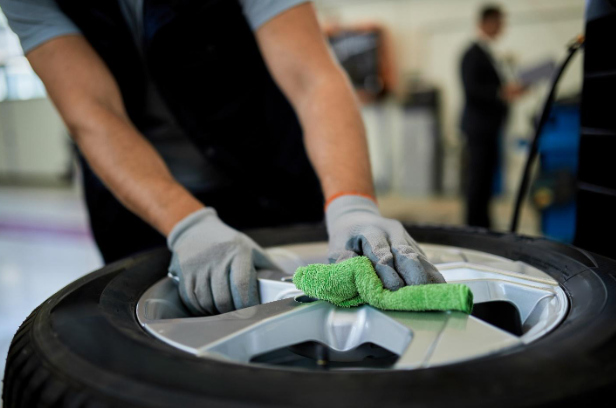
Professional polishing bills at roughly $85 a rim, $200 a fuel tank and $400 or more for a bumper, with full tractor packages running from $1,000 to $4,000. Those numbers make appearance work look like a discretionary line item, right up until an appraiser walks a row of your tractors and forms a view about how the rest of the equipment has been treated. Run in-house at maintenance intervals, with buying consumables as a bundle rather than by the bottle, the cost per truck falls to a few dollars.
The question is whether that spend returns anything. Here is what it actually does.
What appraisers are really reading
Nobody pays more for a truck because it is shiny. They pay more because cosmetic condition is the cheapest available proxy for maintenance culture, and appraisers use it as one.
A tractor with chalked aluminium, corroded fasteners and staining around the tank straps signals an operation that defers things. The appraiser cannot inspect your PM records in the ten minutes they have, so they extrapolate from what they can see. A uniform fleet where every unit looks the same signals the opposite — standards that are applied consistently rather than when someone gets round to it.
That inference is doing the work, not the shine itself. Which is why consistency across the fleet matters more than any individual truck being immaculate.
The part that is not cosmetic
Bare aluminium oxidises continuously. The white chalky bloom is aluminium oxide, and while a thin layer is self-limiting, neglect combined with road salt and wash chemicals produces pitting that is genuinely structural rather than cosmetic. Pitted aluminium cannot be polished back. It has to be sanded and refinished, or replaced.
There is an inspection argument too. A polished surface makes cracks, stress marks and fastener movement visible, where an oxidised one hides them. Drivers doing pre-trip checks find more on clean equipment, and that is a safety return rather than a resale one.
Stainless components have a different failure mode. Chloride from road salt attacks the passive chromium oxide layer and produces brown speckling — tea staining — which looks like rust and usually is not, but which progresses to pitting if left across multiple winters.
Interval, not event
The mistake most fleets make is treating polish as a pre-sale activity. Bringing a neglected truck back costs hours of labour or a four-figure contractor invoice, and some of the damage will not come back at all.
Maintenance intervals of roughly two to three months keep surfaces in a condition where each session is short. The economics invert completely: maintained metal takes minutes per component, neglected metal takes an afternoon and may need sanding first.
Tie it to an existing touchpoint. PM services, wash cycles, or driver-assigned responsibility for their own unit — whichever already has a schedule that people follow.
In-house or contracted out
Both, and the split is worth being honest about.
- Contract out the restoration. Heavily oxidised wheels and tanks need machine work and sometimes sanding. Paying a specialist once to bring a unit back to baseline is cheaper than tying up a technician for a day.
- Keep maintenance in-house. Once a surface is at baseline, holding it there is hand work measured in minutes, and the consumable cost per truck is trivial.
Fleets that outsource everything pay contractor rates for work their own people could do in fifteen minutes. Fleets that insist on doing everything in-house tie up labour on restoration jobs they are not equipped for. The split is where the money is.
Product selection is a liability decision
A tractor is not one material. Polished aluminium, anodised trim, stainless, decorative chrome, metallised plastic and painted surfaces all sit within a few feet of each other, and a technician working through a checklist will not stop to identify each one.
Which is why the specification that matters is a non-abrasive polish that won’t damage plated or coated surfaces. Abrasive compounds brighten by removing material — acceptable on solid aluminium, ruinous on a micron of chromium or on anodised trim, where the damage is permanent and the part gets replaced. One product that is safe across everything on the unit removes an entire category of mistake from the shop floor.
Steel wool deserves a specific ban. It leaves carbon particles embedded in the surface that rust weeks later, and the resulting corrosion gets blamed on the metal rather than the method.
What it costs to run
Per-truck consumption is small because polish is applied in thin films on defined components — wheels, tank, bumper, stacks, grille, diamond plate.
For a per-unit allocation, a 16oz bottle, which is the practical per-truck size, covers a full maintenance cycle on a tractor with margin. The 32oz sizes make more sense as a shop stock item for multi-unit fleets, where one bottle serves the whole yard rather than being assigned to a single vehicle.
Which components are worth the time
Not everything on a tractor repays attention equally. Ranked by visual return per minute spent:
- Wheels. The highest-impact surface on the unit and the one an appraiser looks at first. Also the most exposed to salt and brake dust.
- Fuel tanks. Large, flat and at eye level. Nothing signals neglect faster than a chalked tank.
- Bumper and grille. Front-facing, and the first thing seen in any photograph taken for a listing.
- Stacks and exhaust. Heat-affected and prone to discolouration, but visually prominent.
- Diamond plate and steps. Lower priority cosmetically, higher priority for corrosion, since they collect salt and water.
The driver argument nobody costs
Worth raising with anyone who thinks this is vanity spending. Drivers notice what they are assigned. In a market where retention is a persistent cost line, equipment that looks cared for is part of how an operation presents itself to the people operating it — and replacing a driver costs considerably more than maintaining a fleet’s appearance for a year.
The short version
Polishing does not add a premium by itself. It prevents the discount that comes from an appraiser reading neglect, it stops oxidation reaching the point where aluminium needs refinishing, and it makes defects visible during pre-trip checks. Run it at two to three month intervals, contract out restoration and keep maintenance in-house, and use one non-abrasive product across every substrate so nobody has to decide.