Power vs. Portability: Mastering Size-to-Power Ratio

Picture this: you’re at a remote campsite, your laptop dying mid-project, and your bulky power station sits uselessly in the car because it was too heavy to carry. Or you’ve packed light with a compact charger that can’t sustain your essential medical device overnight. This frustration defines the eternal struggle between power capacity and portability—a balance every modern traveler must master. The size-to-power ratio has emerged as the critical metric for evaluating portable power stations, measuring how much energy you can access per unit of weight and volume. Travelers face unique challenges: gear must fit airline carry-on limits, survive rugged handling, and charge from whatever sources are available—solar panels in the wilderness, car outlets on road trips, or hotel wall sockets. This article provides a comprehensive guide to optimizing this delicate balance, helping you choose power solutions that match your specific travel patterns. We’ll decode the technical metrics behind size-to-power ratios, explore real-world trade-offs between capacity and compactness, examine essential charging versatility for on-the-go scenarios, and deliver a practical five-step framework for selecting your ideal portable power companion.
Decoding Size-to-Power Ratio: The Traveler’s Core Metric
The size-to-power ratio quantifies how much usable energy a portable power station delivers relative to its physical footprint and weight. Scientifically expressed as watt-hours per kilogram (Wh/kg) or watt-hours per liter (Wh/L), this metric reveals the efficiency of a device’s energy storage technology. At its heart lies energy density—the concentration of power packed into battery cells. Modern lithium-ion batteries achieve roughly 150-250 Wh/kg, while emerging lithium iron phosphate (LiFePO4) cells trade some density for longevity and safety. Understanding the distinction between capacity and dimensions is crucial: a 500Wh station might weigh 7kg with compact dimensions or 10kg in a bulkier chassis, dramatically affecting portability. Travelers prioritize this ratio because every gram and cubic centimeter competes with clothing, cameras, and other essentials in limited luggage space. A backpacker carrying gear up mountain trails experiences the difference between a 6kg station and a 9kg model with identical capacity—that extra 3kg translates to fatigue and reduced mobility. Similarly, vanlifers working within tight storage compartments need maximum power without sacrificing living space. The real-world impact manifests at airport check-ins where weight limits are strict, during hikes where every ounce matters, and in vehicles where space determines what else you can bring. Optimizing this ratio means accessing sufficient power without the burden of excessive bulk, enabling genuine mobility while maintaining energy independence across diverse travel scenarios.
The Power vs. Portability Trade-Off Demystified
When Power Dominates: High-Capacity Limitations
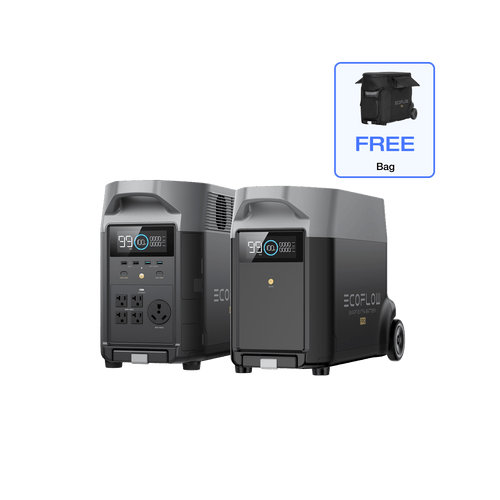
Stations exceeding 1000Wh serve specific demanding scenarios: powering electric coolers during week-long camping trips, running full-size laptops and monitors for remote work setups, or sustaining multiple medical devices simultaneously. These powerhouses enable true off-grid living but extract steep portability costs. A typical 1500Wh unit weighs between 15-20kg—equivalent to a medium suitcase—and occupies substantial cargo space that could otherwise hold camping gear or supplies. For travelers, this creates immediate mobility restrictions. Airlines classify many high-capacity stations as hazardous materials due to lithium battery regulations, forcing checked baggage or outright bans. Backpackers find them impractical for any distance beyond vehicle-to-campsite transfers. Even car travelers sacrifice trunk organization, as these units dominate storage areas and require secure positioning to prevent shifting during transit. The weight becomes particularly problematic during setup and teardown at each destination, turning what should be convenient power access into a logistical burden.
Ultra-Portable Compromises: Capacity Caps
Compact stations under 300Wh prioritize packability, often weighing just 3-5kg and fitting easily in backpack side pockets. However, their limited reserves constrain device compatibility and usage duration. A 245Wh station might fully charge a smartphone eight times but struggles with power-hungry equipment. CPAP machines requiring 40-50Wh nightly allow only four to five nights of operation before depletion. Portable mini-fridges drawing 40W continuously drain such units within six hours, making them unsuitable for food preservation during day trips. Photography enthusiasts face runtime anxiety when charging multiple camera batteries and drone packs simultaneously. The fundamental compromise emerges during extended periods without recharging access—a three-day music festival or remote hiking expedition quickly exposes capacity shortfalls. These ultra-portable options excel for urban travelers with daily hotel access or weekend adventurers near their vehicles, but falter when genuine energy independence becomes necessary beyond 24-hour cycles.
Charging Options: Your On-the-Go Lifeline
Charging versatility separates functional travel power from stranded equipment. Solar input provides genuine off-grid autonomy—essential for multi-day wilderness expeditions where no electrical infrastructure exists. Modern stations accept 100-200W panels that restore 500Wh capacity in four to six hours of direct sunlight, enabling indefinite operation in remote locations. DC car charging transforms road trips into continuous power cycles, replenishing batteries during transit between destinations without sacrificing exploration time. This method typically delivers 8A at 12V, adding roughly 100Wh per driving hour—sufficient for most travelers alternating between movement and stationary camps. AC wall charging remains the fastest recovery method, with advanced stations completing full cycles in 90 minutes through technologies that manage heat and cell balance during rapid input. This speed proves critical when catching brief hotel stops between activities or maximizing limited outlet access at airports and cafes. Multi-device support amplifies practical value: simultaneous USB-C, USB-A, and AC outputs let travelers charge phones, cameras, and laptops concurrently without prioritizing or waiting. Fast-charging capabilities directly impact itinerary flexibility—quick top-ups during meal breaks or short drives maintain power availability without dedicated charging sessions that disrupt schedules. Safety features like temperature monitoring, short-circuit protection, and waterproof ratings ensure reliable operation across humid tropical beaches, dusty desert trails, and cold mountain environments where conditions challenge electronics.
Balanced Performer Spotlight: EcoFlow RIVER 3 Case Study
The EcoFlow RIVER 3 exemplifies optimized size-to-power engineering, delivering 245Wh capacity at just 3.6kg—achieving approximately 68Wh/kg, which positions it among the most efficient compact stations for active travelers. Its dimensions of 245×191×133mm fit comfortably in standard backpack main compartments without dominating interior space, leaving room for clothing and gear. The proprietary X-Stream technology enables full recharges in just 60 minutes via AC outlets, transforming brief coffee shop stops or hotel layovers into complete power restoration opportunities that align with fast-paced itineraries. Solar input compatibility accepts up to 110W panels, providing genuine off-grid sustainability for weekend wilderness trips where four hours of sunlight replenishes daily device consumption. In real-world backpacking scenarios, the station comfortably powers smartphone charging cycles, mirrorless camera battery top-ups, and drone pack replenishment throughout three-day expeditions without weight fatigue. Campervan travelers appreciate its stackable form factor that maximizes vertical storage in tight cabinets while maintaining accessibility. The unit supports simultaneous outputs across USB-C, USB-A, and AC ports, enabling concurrent laptop work, phone charging, and LED light operation—the multi-device functionality essential for modern digital nomads who refuse to choose between connectivity and mobility during extended travel adventures.
Choosing Your Ideal Station: 5-Step Traveler’s Framework
Step 1: Audit Your Device Ecosystem
Begin by creating a comprehensive inventory of every device you’ll power during trips. List smartphones, tablets, laptops, cameras, drones, portable speakers, headlamps, and any medical equipment like CPAP machines. For each item, identify its battery capacity in watt-hours—usually found in specifications as mAh multiplied by voltage, then divided by 1000. A smartphone with a 4000mAh battery at 3.7V contains approximately 15Wh. Sum these values across all devices you’ll charge during a typical day away from outlets. Add a critical 20% buffer to account for charging inefficiencies, cold weather performance drops, and unexpected usage spikes. This calculation reveals your minimum capacity threshold—a traveler charging two phones (30Wh), a laptop (50Wh), and a camera (20Wh) needs at least 120Wh, suggesting a 150Wh+ station after applying the safety margin.
Step 2: Set Portability Thresholds
Define your absolute maximum weight and dimensions based on travel mode. Backpackers should cap stations at 5kg and dimensions under 30cm in any direction to maintain pack balance and fit standard compartments. Car campers can tolerate 10-15kg but must ensure units fit securely in trunks without rolling. Measure your actual storage spaces—backpack main compartments, vehicle cargo areas, or campervan cabinets—and subtract space needed for other essentials. Test ergonomics by simulating carries: hold weighted objects matching prospective station specs for five minutes to assess handle comfort and whether you can manage the load during setup at campsites or while navigating airports.
Step 3: Map Charging Scenarios
Identify which input methods align with your itineraries. Wilderness backpackers prioritize solar compatibility with at least 100W panel support for multi-day autonomy. Road trippers emphasize DC car charging to replenish batteries during driving segments between destinations. Urban travelers and hotel-hoppers need fast AC charging to maximize brief outlet access windows. Honestly assess your typical outlet availability—daily hotel stays enable smaller capacities with nightly recharges, while week-long off-grid adventures demand larger reserves or robust solar systems. Rank these inputs by frequency: if you’ll access wall power every two days, AC becomes primary with solar as backup.
Step 4: Output Flexibility Check
Verify the station provides sufficient output types and power levels for your devices. Modern laptops require USB-C Power Delivery at 60-100W—confirm the station’s USB-C port meets your machine’s specifications. Count how many devices you’ll charge simultaneously and ensure adequate port quantities: travelers juggling phone, tablet, and camera need at least three USB outputs. Check AC outlet count if powering small appliances like portable fans or electric shavers. Validate total output capacity supports concurrent use—charging a 65W laptop while powering a 40W mini-fridge requires at least 110W combined output capability without overloading the system.
Step 5: Future-Proofing Extras
Consider features that extend long-term value and adaptability. App-based monitoring via Bluetooth or Wi-Fi provides real-time battery status and output management without physically checking the unit—valuable when stations are stored in vehicle trunks or tent corners. Expandable battery compatibility allows capacity upgrades as your power needs grow without replacing the entire system. Evaluate environmental resilience through IP ratings for water and dust resistance if traveling to beaches, deserts, or humid rainforests. Assess warranty length and customer service reputation to ensure support during malfunctions far from home, protecting your investment across years of adventures.
Finding Your Perfect Power Balance
The size-to-power ratio stands as the defining metric for travelers seeking energy independence without sacrificing mobility. Throughout this guide, we’ve established that high-capacity stations above 1000Wh deliver extended runtime but impose significant weight penalties that restrict backpacking and air travel, while ultra-compact units under 300Wh offer effortless portability at the cost of limited device support and shortened operational windows. The sweet spot emerges in mid-range stations that balance 245-500Wh capacity with weights under 7kg, providing sufficient power for typical multi-day adventures while remaining genuinely portable. Charging versatility proves equally critical—solar input enables wilderness autonomy, DC car charging transforms transit time into power restoration, and rapid AC recharging maximizes brief outlet access during fast-paced itineraries. The five-step framework presented here—auditing device needs, setting portability thresholds, mapping charging scenarios, verifying output flexibility, and considering future-proofing features—provides a systematic approach to cutting through marketing claims and technical specifications. Ultimately, your ideal portable power station must align with your specific travel patterns: backpackers prioritize weight efficiency and solar compatibility, road trippers value DC charging and moderate capacity, while digital nomads need fast AC recovery and robust USB-C outputs. By applying this personalized assessment rather than chasing maximum specifications, you’ll achieve the optimal balance that keeps devices powered without turning energy management into a burden that diminishes your travel experience.