Tiling Over Existing Tiles: When It Works and When It Doesn’t
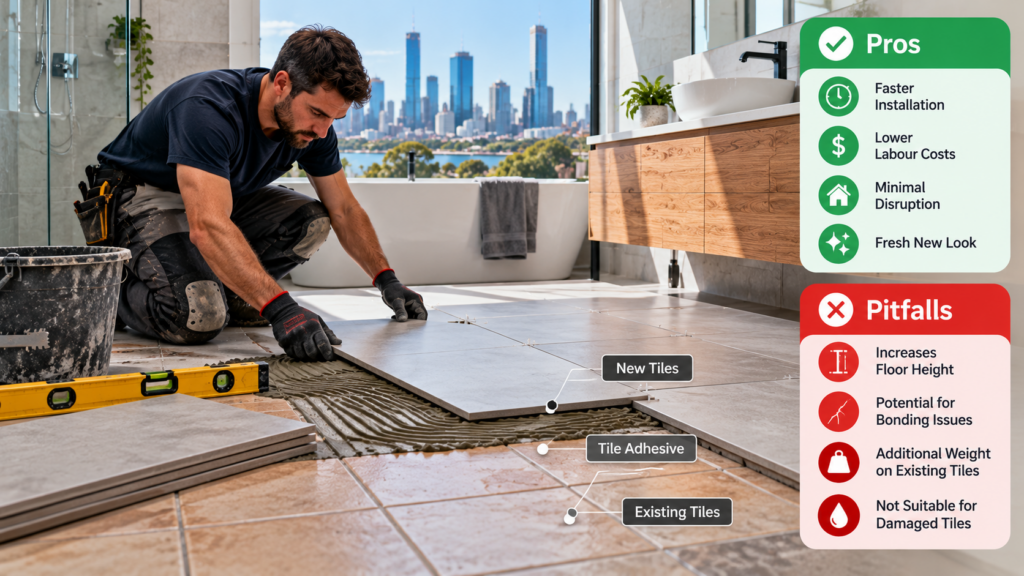
Laying new tiles straight over old ones sounds like the obvious shortcut. There is no demolition dust, no skip bin in the driveway and fewer days without a working bathroom. In some rooms it genuinely can work, but in a wet area the real question is not how the old tiles look. It is what is happening underneath them. One local service page on bathroom tiling Melbourne explains that the decision depends on the condition beneath the existing tiles, and that full renovations are usually stripped back to the substrate so structural problems can be inspected and fixed.
Why Waterproofing Decides Everything
Tiles and grout look solid, but neither is a waterproof barrier. Grout is porous, and over time water works its way through it towards the substrate. What actually keeps a bathroom dry is the waterproofing membrane underneath.
In Australia, the National Construction Code references Australian Standard AS 3740 (Waterproofing of Domestic Wet Areas) as a way for wet areas to comply, while AS 3958.1 covers the installation of ceramic tiles. An overlay still has to meet those benchmarks, so new tiles are only ever as good as the waterproofing they sit on.
This is where tiling over tiles runs into trouble. If the original membrane is failing, a fresh layer of tile hides the problem rather than fixing it. Some manufacturers do make membranes that can be applied over existing glazed tiles when paired with a specific primer, but that approach depends on a sound, well-bonded base and strict adherence to the product instructions.
When an Overlay Can Work
An overlay is most likely to succeed when several conditions line up:
- The existing tiles are firmly bonded. Tapping them with the handle of a screwdriver helps here, because a hollow sound suggests the adhesive has let go.
- There are no signs of leaks, such as stained skirting, swollen cabinetry, mould along the floor junction or damp patches in adjoining rooms.
- The surface is flat enough for new tiles to sit evenly, and the floor still falls correctly towards the waste.
- The area carries little water, for example a powder room floor, a kitchen splashback or walls well outside the shower.
- There is room for the extra height without causing problems at doors, the floor waste or fixtures.
Even then, the old glaze needs proper preparation (typically cleaning, degreasing and priming or mechanically roughening the surface) so the new adhesive can grip. Skipping this step is one of the quickest ways to end up with drummy tiles.
When the Old Tiles Need to Come Out
Removal is usually the safer path in these situations:
- Shower recesses and other wet zones. These areas take the most water, and nobody can verify the condition of a membrane they cannot see.
- Cracked, loose or drummy tiles. Movement in the base layer transfers straight into the new one.
- Evidence of water damage. Rot in timber framing or floor sheeting has to be found and repaired, which means getting down to the structure.
- Changes to layout or plumbing. Moving a shower, vanity or waste disturbs the wet area, so the waterproofing needs to be redone.
- Older homes with timber subfloors. Many period houses in Melbourne’s inner and northern suburbs have bathrooms built on timber floors, some already retiled more than once. Each layer adds weight and height, and a floor that flexes can crack the grout and tiles above it.
The Hidden Costs of Added Height
A second layer adds the thickness of the new tile plus its adhesive bed. That sounds minor, but it affects more than you might expect. Doors may need trimming. The floor waste can end up sitting below the new surface unless it is raised. Wall tiles may finish proud of window reveals, switches and tap flanges, which then need extensions. Shower screens, vanities and toilets might have to be refitted to suit the new levels.
These extras can quickly eat into the savings that made the overlay attractive in the first place, so they are worth pricing before any decision is made.
What to Ask Before Agreeing to an Overlay
Victorian building law adds a layer of protection that is easy to overlook. According to the Building and Plumbing Commission (which now incorporates the former Victorian Building Authority), domestic building work valued at more than $10,000, counting labour, materials and GST, must be carried out by a registered building practitioner. Consumer Affairs Victoria also notes that work above that amount requires a written major domestic building contract.
Before agreeing to an overlay, it is worth asking the contractor to set out in writing:
- how they assessed the bond and condition of the existing tiles
- whether any waterproofing work is included and which standard it follows
- how the floor waste, doors and fixtures will be handled at the new height
- what happens if hidden damage turns up once work starts
Clear answers to these points reveal far more than the headline price. An overlay that suits a dry powder room can be a costly mistake in a shower, and the difference usually lies in what cannot be seen from the surface.