Understanding Inverter And Battery For Home: A Complete Power Backup Solution
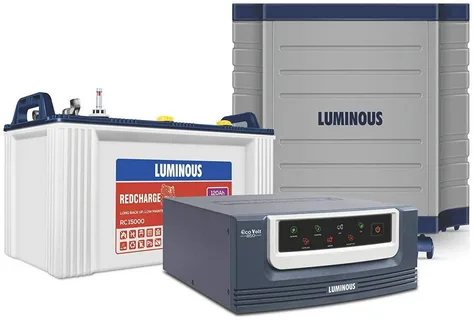
Power interruption can disrupt daily life, where everything runs on a consistent supply of electricity. Inverter and battery offer an effective and reliable power backup solution. The two work together to deliver the power supply in the scenario of a power outage. But what is the relevance of each part? It needs to be understood for informed decision-making. This article explores the functioning, types and selection factors of inverter and battery for home to help choose the right setup based on specific needs.
Understanding Inverter System
The inverter system comprises two key devices: the inverter and the battery. A battery is a charge storage device, while an inverter converts the stored charge into a usable form. A battery stores the energy in DC form. The source of electricity can be solar energy or the main grid. Now, this energy in DC form can not be used to power electronic gadgets.
Hence, inverters come into the picture. The inverters convert the DC into AC to supply the electricity to power the devices. The inverters nowadays possess advanced technologies that offer energy efficiency by operating only when required. They also offer consistent performance with safety.
Types of Inverter and Battery for Home
Let’s understand the kinds of inverter and battery for home one by one:
Inverter
The inverters are of the following types based on the output waveform:
Pure sine wave inverters: These inverters are well-suited for sensitive electronic devices such as refrigerators, televisions, computers and medical equipment. They offer stable power output without causing damage to the connected devices.
Modified sine wave inverters: These inverters are less smooth than sine wave inverters. These are preferred for devices that do not need major voltage regulation. However, they are not suited for sensitive electronic equipment. They are used to power small appliances and basic solar systems. They also generate noise and have lower efficiency.
Square wave inverter: These are cost-effective solutions that provide a rectangular output form. They also produce a humming or buzzing noise during operation. These inverters are generally suitable for lights, fans and small motors.
Batteries
The batteries are of the following types:
Lead acid batteries: They are reliable, cost-effective and popularly used among households. They are of two further types: flat plate and tubular. They differ in the internal structure of the battery. The flat plate battery is available at a low cost but with a shorter lifespan. The tubular inverters are better as they allow a deeper discharge cycle and have a larger lifespan. The tubular ones, however, are costly.
Lithium-ion batteries: These are advanced batteries with high-quality performance. They are compact, lightweight and exhibit higher efficiency. Further, they also require less maintenance and have an extended lifespan. All of this, however, requires a higher investment. Yet, they are chosen for a long-term solution.
Gel batteries: These batteries comprise a gel-like electrolyte. Also, they are maintenance-free, leak-proof and suited for high temperatures as well. Gel batteries also offer better deep-cycle performance.
Factors Affecting the Choice of Inverter and Battery for Home
There are different factors that influence the choice of inverter and battery for home.
Inverter
The inverter will be chosen based on the following aspects:
Power requirements: Assess the specific power needs for your home. It will include understanding the peak power (the additional power required to start the appliance) and the continuous power (running load). Add the power requirements of a few additional appliances you may use. Also, factor in the estimated usage time, i.e., the power backup duration of the inverter and frequency of power cuts and hence choose the inverter capable of delivering the required load capacity.
Types of inverters: Based on the type of devices to be connected with the inverter and the characteristics of different types of inverters, make a choice between pure sine, modified sine and square wave inverters.
Advanced features: The modern inverters are now available with high efficiency, which prevents energy waste. It enables maximum utilisation of the energy stored in the battery to lower the electricity bills. Additional features like overload, short-circuit, and high-temperature protection are also available in the inverters.
Battery
The choice of battery will depend on the following requirements:
Type of battery: With different costs and features of the batteries, the choice will need to be made accordingly.
Battery capacity: It will include the battery’s capacity to provide power for as many appliances as you need for the duration of the power cut. Also, an important thing to include is the Depth of Discharge (DoD). It refers to the percentage of the total capacity of the battery that has been consumed before recharge. DoD is indicative of the energy possible to be safely delivered before the requirement for recharging.
Temperature impact: Temperature variations can have a negative influence on the battery. Hence, the battery’s ability to deliver quality performance despite temperature variation must also be present.
Advanced features: The batteries also come with certain advanced features. These include remote monitoring and control capabilities through smartphones, overcharging and over-discharging protection, charge indicators, smart charging algorithms and others.
Conclusion
An inverter and battery for home is a practical and efficient way for continuous power. While a battery stores the electricity to power the appliances, the inverter converts the stored form into a usable form of charge. The right combination of both is essential to obtain a quality power supply during the hours of need. It includes assessment and evaluation of the load requirements, backup duration, battery type, efficiency and safety features. The right setup helps achieve convenience and comfort while reducing energy consumption.