Why Do Solar Panels Shut Off at Night?
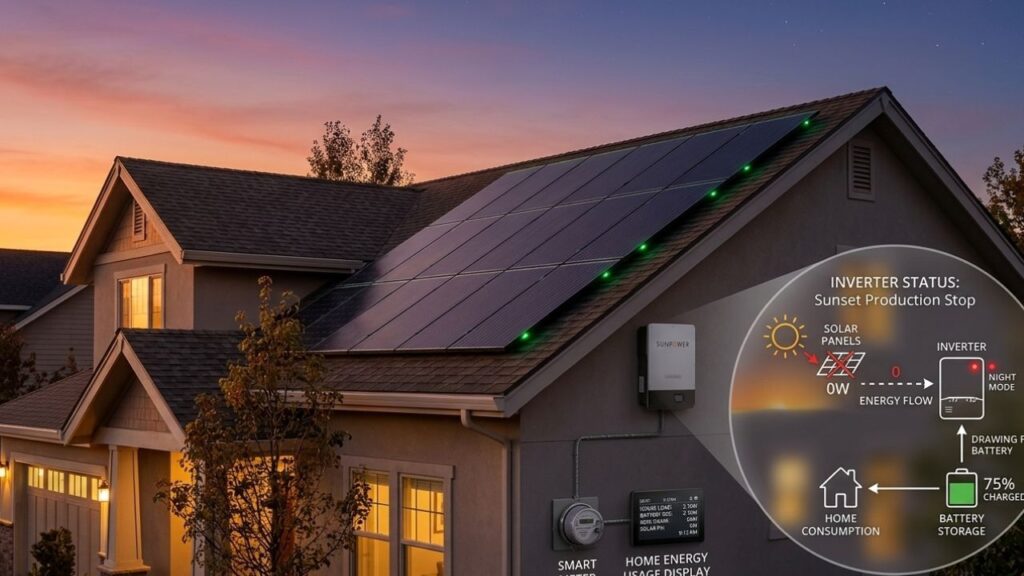
If you’ve ever glanced at your solar monitor after sunset and wondered why your system shows zero output, you’re not alone. Many homeowners with Solar Panels on Hope Island ask this very question. The short answer: solar panels need sunlight to work, and shutting down at night isn’t a flaw—it’s exactly how they’re designed to behave.
The Science of Photovoltaics
Solar panels generate electricity through a process called the photovoltaic effect. When sunlight hits the silicon cells inside a panel, it knocks electrons loose, creating a flow of direct current (DC) electricity.
No sunlight, no electron movement. No electron movement, no electricity. It really is that straightforward. This is why any quality Australian Solar Installation is built around the assumption that panels will produce power during daylight hours only. The system isn’t broken after dark—it’s simply resting until the sun returns.
The Role of the Inverter
Your inverter is the brain of your solar system. During the day, it converts DC electricity from your panels into usable AC electricity for your home. At night, when it detects no incoming current from the panels, it automatically enters standby mode.
This isn’t just an energy-saving feature—it’s a safety mechanism. Inverters are designed to shut down under low-light conditions to prevent backfeed, which could otherwise push electricity into the grid and create hazards for utility workers. So when your Australian Solar Installation goes quiet after sunset, your inverter is doing exactly what it should.
Managing Nighttime Energy
Here’s where homeowners often have the most questions: if panels don’t work at night, how do you keep the lights on?
There are two main options:
- Grid connection: Most solar homes stay connected to the electricity grid. At night, you simply draw power from the grid as needed. During the day, any excess solar energy your home doesn’t use gets fed back to the grid—often earning you credits through a feed-in tariff.
- Solar batteries: A battery storage system allows you to store surplus solar energy generated during the day and use it after sunset. For homeowners with Solar Panels on Hope Island, this can be a game-changer, especially during summer when panels generate more energy than a household can consume in daylight hours.
Batteries do add upfront cost, but they increase your energy independence and help you get more value from your system over time.
Common Misconceptions
A few myths tend to circulate around this topic, so it’s worth clearing them up.
“Moonlight can power my panels.”
Moonlight is reflected sunlight, and it’s far too dim to trigger meaningful electricity generation. The photovoltaic effect requires direct solar irradiance—moonlight simply doesn’t cut it.
“Streetlights or indoor lighting can charge my panels.”
Artificial light lacks the intensity and the specific wavelengths needed to generate usable electricity from standard solar panels. While some highly specialized cells can respond to artificial light in controlled lab environments, residential panels cannot.
“My panels are faulty if they show no output at night.”
Not at all. Zero output after dark is completely normal behavior for any Solar Panels on Hope Island system or any other residential solar setup across the country.
Conclusion
Understanding why your panels go dormant at night helps you use your system smarter. The key is shifting as much of your energy consumption as possible to daylight hours—running dishwashers, washing machines, and EV chargers while the sun is up.
Paired with a well-sized battery or a solid grid connection, a properly installed Australian Solar Installation can cover your energy needs around the clock. It takes a little planning, but once you understand the rhythm of your system, maximizing your solar investment becomes second nature.