Heat vs. Chemicals: Which Bed Bug Treatment Is Right for Your Toronto Home?
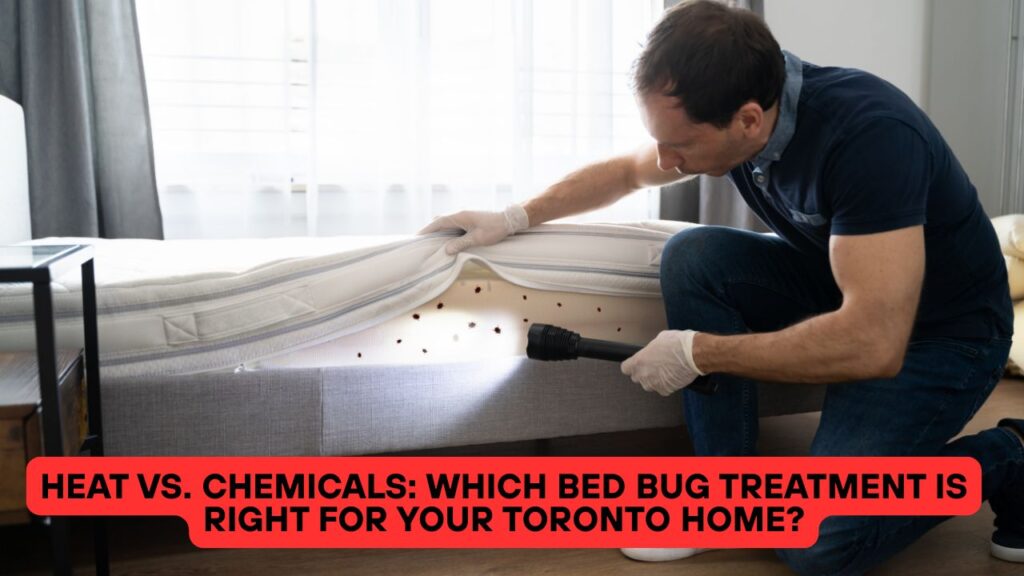
Woke up with suspicious bites? Noticed tiny rust-colored spots on your sheets? If you’re even thinking the words “bed bugs,” your next move matters a lot. You’re not just trying to get rid of a few bugs—you’re stopping an infestation in its tracks.
But here’s the real question most people in Toronto run into: Should you go with heat or chemicals to treat bed bugs?
Both options are widely used, and both have their place. But they work very differently, come with different costs, and have different pros and cons. So if you’re comparing options before calling a bed bug exterminator Toronto professionals recommend, here’s what you need to know.
How Heat Treatment Works
Bed bug heat treatment is exactly what it sounds like: heating up your home to a temperature that kills bed bugs at every stage of life—eggs included.
Here’s the breakdown:
- Industrial heaters are set up in your space
- Technicians raise the temperature to around 130–145°F (54–63°C)
- This heat penetrates walls, furniture, mattresses, and other hiding spots
- The process usually takes 6–8 hours
Because it doesn’t rely on chemicals, it’s seen as one of the cleanest, most effective methods available.
How Chemical Treatment Works
Chemical treatment uses approved pesticides—either sprayed, dusted, or fogged—throughout your home. It typically requires:
- Multiple visits over a few weeks
- Application of different products to kill adults and eggs
- Treating cracks, crevices, furniture, baseboards, and more
- Isolating or sealing some items until the treatment cycle ends
While it can be effective, this method relies on precise application and often takes longer to fully resolve an infestation.
Effectiveness: Which Gets Better Results?
Heat treatment generally offers faster and more thorough results. Why?
- It kills eggs instantly—an important advantage, since bed bugs reproduce fast
- It doesn’t rely on the bug coming into contact with chemicals
- The heat reaches bugs even in deep hiding places
Chemical treatment, on the other hand, can be effective but usually requires repeat visits. Eggs can survive the first round, so exterminators return once they’ve hatched.
If you’re looking for a fast solution with less disruption, heat usually wins. But some infestations may call for both approaches combined.
Cost Comparison
Let’s talk dollars—because your decision might come down to your budget.
Heat Treatment Cost in Toronto:
- Generally ranges from $1,500 to $3,500
- Typically a one-time service
- Worth considering if you want immediate, full results
Chemical Treatment Cost in Toronto:
- Usually ranges from $300 to $800 per visit
- Most infestations need 2 to 3 treatments
- Total cost can range from $900 to $2,400
While chemical treatments seem cheaper upfront, multiple visits can make them costlier over time. If chemical efforts fail, you may need to switch to heat anyway.
Pros and Cons: A Quick Breakdown
Heat Treatment Pros:
- One-day solution
- Kills all life stages, including eggs
- No chemicals involved
- Reaches into hidden spaces
Heat Treatment Cons:
- Higher upfront cost
- Requires temporary evacuation of the home
- May need prep work like moving electronics or pets
Chemical Treatment Pros:
- Lower cost per visit
- Can be effective in mild infestations
- Useful as a follow-up after heat treatment
Chemical Treatment Cons:
- Slower results
- May require multiple visits
- Uses pesticides
- Doesn’t always reach bugs in deep hiding places
Safety and Sensitivity Considerations
For homes with pets, kids, or allergy concerns, heat treatment may feel like the safer choice. No chemicals, no residue, no extra precautions once you’re back home.
Chemical treatments are regulated and generally safe when handled professionally. But there’s always a risk if guidelines aren’t followed after the visit—especially around food, fabrics, and children’s items.
When to Choose Heat
- You want fast, one-time treatment
- You’ve already tried DIY methods without success
- You need to avoid chemicals due to allergies or health reasons
- You live in a cluttered space or can’t access all areas easily
Heat treatment is also ideal for rentals, short-term vacation homes, and homes where immediate turnaround is a priority.
When to Choose Chemicals
- Your budget is tight and you’re okay with multiple visits
- You’ve caught the infestation early
- You’re working with a bed bug exterminator Toronto experts trust who offers comprehensive plans
- You’re comfortable with a longer process and following post-treatment instructions
Some pest control companies now combine both methods—using heat for the initial kill and chemicals as a follow-up defense. This hybrid approach helps prevent reinfestation.
So, What’s the Best Bed Bug Removal Toronto Has to Offer?
If you’re facing a major infestation, heat treatment is often the fastest, most reliable solution. It’s clean, powerful, and leaves no chemical traces. But chemical treatments still have value—especially when used strategically or when budget constraints are real.
The smart move is to consult a reputable bed bug removal Toronto service. Let them inspect your space, assess the severity, and guide you toward the best approach. Most of all, don’t wait. The longer you delay, the worse—and more expensive—the problem becomes.
Call in a licensed bed bug exterminator Toronto residents trust, and take the first real step toward getting your home, and your peace of mind, back.