Can You Get a Mortgage as an Expat? Complete Guide

Many believe that simply residing abroad makes one ineligible for mortgages. However, this is not necessarily the case since eligibility largely depends on factors like income stability, credit history, paperwork, and policies of the bank and not just your location. International finance of property does come with its own set of procedures, but international finance is well-prepared to deal with overseas applicants.
Lenders do not completely close their doors to global professionals; instead, they alter their underwriting models to account for cross-border financial structures. By understanding how financial institutions evaluate foreign risk, you can efficiently position your application for success. If you are looking to secure a residential or investment loan while working overseas, specialized platforms such as Aussie Expat Home Loans can help you navigate these complex international lending policies.
Who Is Considered an Expat Borrower?
The definition of an expatriate borrower for mortgage underwriting purposes is based on your tax residency and source of income, and not simply your nationality. Financial institutions classify you under this umbrella if you fit into any of the following categories:
- Overseas Employees: Professionals working full-time or on corporate contracts for an employer located outside their home country.
- Self-Employed Abroad: Business owners, consultants, or freelancers operating registered commercial entities in international jurisdictions.
- Foreign Income Earners: Individuals receiving their primary salary, dividends, or allowances in a currency other than the local currency of the property being purchased.
Can Expats Get a Mortgage?
Yes, expatriates can absolutely qualify for a mortgage. However, approval is never automatic and depends entirely on individual financial circumstances and varying lender policies.
Traditional retail banks often have rigid verification systems that struggle to process foreign tax documents or overseas credit files. Because standard domestic branches are rarely trained in international compliance, many expatriates choose to look beyond mainstream retail products.
Specialist non-bank lenders and international financial firms frequently offer dedicated expat home loans, featuring underwriting guidelines specifically designed to assess global wealth structures.
Key Requirements for Expat Mortgage Approval
- Employment Stability
Lenders look for financial consistency. If you work for a multinational corporation or a well-established local company, you generally need to be past your probationary period. If you are self-employed or work on a freelance basis, you face stricter screening, often requiring a minimum of two years of certified international tax returns.
- Income Verification
Your borrowing capacity is heavily influenced by foreign income shading. To protect against sudden currency fluctuations, financial institutions rarely count 100% of an overseas salary. Instead, they apply a safety margin—or a “haircut”—discounting your converted income by 20% to 40% in their affordability calculators. The level of shading typically depends on the stability and global trading volume of your specific currency.
- Credit History
Underwriters must verify your past financial responsibility. Lenders will pull a comprehensive credit report from your home country to check for outstanding liabilities or defaults. Additionally, they may request an international credit report from bureaus in your current country of residence to ensure you maintain a strong global credit profile.
- Deposit Requirements
Because overseas lending carries higher administrative risk, deposit requirements are more conservative than for domestic applications.
- Standard Entry: Most expat mortgages require a minimum 20% deposit, representing an 80% Loan-to-Value Ratio (LVR).
- Conservative Caps: For high-density properties or more volatile foreign currencies, lenders may cap the loan at a 70% LVR, requiring a 30% down payment.
- Existing Financial Commitments
Your total debt-to-income (DTI) ratio is scrutinized under responsible lending frameworks. Every existing obligation—including foreign credit cards, personal car loans, and overseas rental payments—is factored into your serviceability equations.
Documents Expats Usually Need
To ensure a smooth loan assessment, applicants must compile a comprehensive digital paperwork trail:
- A current passport and a valid international working visa or residency permit.
- The last 3 to 6 consecutive overseas payslips.
- A formal letter from your employer confirming your role, salary, and length of service.
- Certified tax records or official government tax assessments from your country of residence.
- The last 6 months of personal bank statements showing regular salary credits.
- Statements for all active debts, credit cards, and existing financial liabilities.
- Proof of your current overseas residential address (e.g., a utility bill or tenancy agreement).
Core Eligibility Factors At A Glance
| Factor | Why Lenders Consider It |
| Income Stability | Confirms the borrower’s long-term repayment ability. |
| Credit History | Demonstrates past financial responsibility and debt management. |
| Deposit Size | Reduces the financial institution’s overall lending risk. |
| Employment Status | Shows income consistency and job security. |
| Existing Debts | Determines actual borrowing capacity and debt-to-income margins. |
Common Challenges Expats Face When Applying for a Mortgage
The main hurdle for an overseas borrower is navigating the strict serviceability buffers imposed by central banks and global financial regulators. When converting foreign currency into local funds, lenders use defensive exchange rates that can artificially compress your calculated purchasing power.
Furthermore, processing delays are common. The time difference between international offices, the complexity of verifying foreign corporate entities, and the need for certified document translations can extend standard approval timelines.
How Expats Can Improve Their Mortgage Approval Chances
Expat Mortgage Approval Priorities
The following chart outlines the relative importance that international underwriters place on different components of an expat application during the risk review.
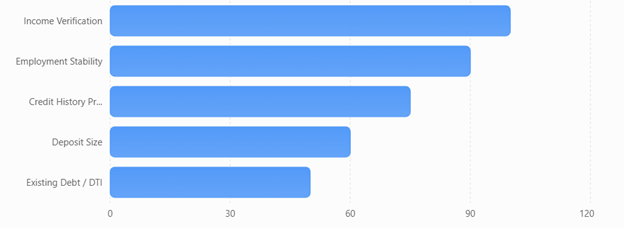
Macro Underwriting Assessment Weights
When an offshore file is submitted, the macro assessment is typically balanced across these primary analytical categories:
| Income & Currency Shading: 35% ➔ Global Credit Bureau Review: 25% ➔ Down Payment / LVR: 20% ➔ Job Continuity: 10% ➔ Existing Liabilities: 10% |
- Maintain a Strong Credit Profile: Keep domestic accounts active and clear any outstanding debts to optimize your credit score before applying.
- Save a Larger Deposit: Aiming for a 20% or 30% deposit lowers your LVR, bypasses expensive lenders mortgage insurance, and unlocks lower interest rates.
- Organize Paperwork Early: Ensure all overseas bank statements, employment contracts, and tax documents are cleanly formatted and digitized.
- Reduce Existing Debts: Close unused credit card accounts and settle minor personal loans to maximize your calculated borrowing capacity.
Why Use an Expat Mortgage Specialist?
Attempting to manage an international property purchase alone often leads to administrative friction. Engaging the expert Australian Expat Home Loans team gives you a clear logistical advantage. Specialist professionals understand which specific lenders apply the most favorable income shading rules for your specific currency. They look across a broad panel of institutions to find competitive products, guide you through the intricate documentation requirements, and handle communication across disjointed time zones—significantly improving your application readiness and probability of loan approval.
Frequently Asked Questions
Can expats get approved for a mortgage?
Yes. Expatriates can legally qualify for both residential and investment mortgages, provided they satisfy the specific risk metrics and documentation criteria mandated by the lender.
What factors affect mortgage approval?
Underwriters primarily evaluate your employment continuity, the stability of your foreign currency, your global credit history, your debt-to-income ratio, and the size of your cash deposit.
Can foreign income be considered?
Yes. Lenders regularly accept foreign salaries, though they will convert the funds to the local currency and deduct a safety margin (shading) of 20% to 40% to buffer against exchange rate volatility.
What documents are needed?
You will generally need to provide a valid passport, work visa, recent payslips, an official letter of employment, foreign tax returns, and comprehensive bank statements.
Can self-employed expats apply?
Yes, but the criteria are stricter. Self-employed expatriates typically must provide at least two full years of certified company tax returns and audited financial statements from their place of business.
Conclusion
The acquisition of a mortgage loan while residing and operating in foreign territories is a fully obtainable financial goal with the proper preparation. Although there is variability in global currency environments and regulatory limits that demand perfection, the road towards property financing is accessible to professionals across the globe. Through the proper preparation of international documents, a good credit standing, and the use of expert mortgage professionals, any foreign applicant can achieve their dream of property ownership.