Choosing the Right Jar Size for Portland’s Herb Shops
If you run a small herbal shop or wellness brand in Portland, you’ve probably noticed how much the local market has shifted toward natural remedies and bulk herbs lately. Customers want to see what they’re buying, and they want packaging that feels trustworthy rather than flashy. That shift puts pressure on shop owners to rethink how they store and present everything from dried chamomile to loose-leaf teas and tinctures.
Why Portland’s Herbalists Are Rethinking Storage
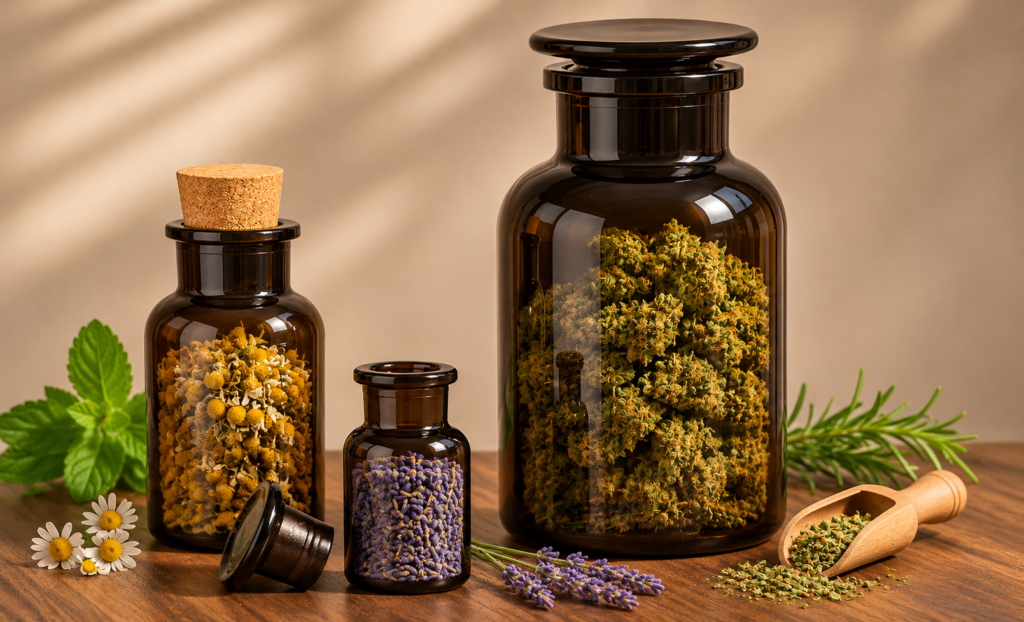
Walk into any neighborhood apothecary around Hawthorne or the Pearl District and you’ll see the same challenge playing out. Owners need containers that protect sensitive plant material from light and moisture while still looking good on an open shelf. Plastic tends to degrade product quality over time, and clear glass lets UV rays break down active compounds faster than most people realize. That’s pushed a lot of local herbalists toward violet or amber glass options that shield contents without needing to hide everything behind closed cabinets.
Picking Between Small Batches and Bulk Containers
One thing that trips up newer shop owners is sizing. A tiny 50 ml jar works fine for a rare blend you only sell a few ounces of each week, but it’s a poor fit for a bestselling bulk herb that moves fast. On the other end, a 2000 ml container makes sense for backroom storage but looks oversized on a retail counter. Thinking through your actual turnover rate before ordering saves you from reordering mid-season or sitting on awkward inventory. Many Portland shops end up running a mixed inventory, using larger containers in the stockroom and smaller apothecary bottles up front for customer-facing displays, which keeps both storage efficiency and shelf appeal in balance.
Matching Closures to What You’re Storing
Closures matter just as much as size, and this is where a lot of shops get it wrong. A ground glass stopper gives you a tight seal that’s easy to open repeatedly, which works well for herbs customers scoop themselves. A cork closure, on the other hand, creates a more airtight environment that’s better suited for longer-term storage of delicate botanicals that lose potency quickly once exposed to air. If your shop also carries concentrates or resins, the same logic applies. Products with a sticky or waxy texture need containers designed to prevent sticking and preserve aroma, which is exactly why some local sellers have started using rosin jars for that part of their lineup instead of repurposing standard jars that weren’t built for the job.
Planning for Retail Display in Local Shops
Beyond function, there’s the practical question of how your shelves actually look to someone walking in off the street. A row of matching jars with consistent labeling signals care and consistency, something Portland shoppers notice quickly given how competitive the wellness scene has gotten here. Sticking to one material and a couple of standardized shapes across your whole product line also makes restocking and labeling far less of a headache for staff working the counter during busy weekend hours.