How Can Businesses Build a More Reliable Electronics Supply Chain?
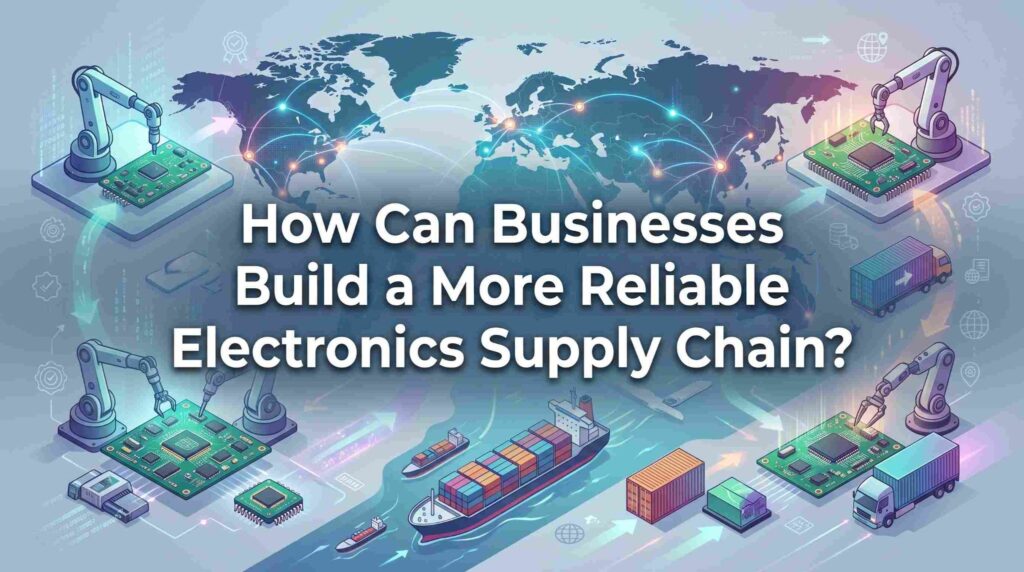
The electronics supply chain has been tested severely over the past few years. Companies that relied entirely on a single massive factory for all their hardware learned a very expensive lesson. Production lines stopped, product launches were delayed, and market share was lost to competitors who could actually ship units. Now, the focus is squarely on resilience. But resilience isn’t just about finding a backup supplier or throwing more money at expediting freight. It requires fundamentally restructuring where and how you source parts, how you design your products, and how you manage your working capital. Let’s look at how hardware businesses are actively adapting to these realities on the ground.
Moving Away from Single Source Dependency
For a long time, the standard playbook was simple. Find the facility offering the lowest piece price and route all your volume there to maximize economies of scale. That math has completely changed. Freight costs, tariffs, and unpredictable shipping lead times mean the lowest upfront price rarely guarantees the lowest landed cost anymore.
Businesses are actively spreading their manufacturing footprint across multiple geographic regions. This approach definitely takes more management overhead. Your team has to audit more facilities, track more purchase orders, and manage a much more complex logistics network. But it prevents a single port closure or local power grid failure from halting your entire operation. Having a qualified secondary supplier ready to take on volume is now a baseline requirement for any serious hardware business. You need a hot backup, not just a name on a spreadsheet.
Leveraging Regional Manufacturing Strengths
Different parts of the world have developed distinct manufacturing specialties over the last thirty years. You don’t just throw a dart at a map when looking for secondary suppliers. You look for established industrial ecosystems. If you need printed circuit boards, you have to go where the infrastructure, raw materials, and trained technicians already exist.
Setting up production for PCB assembly in thailand has become a standard move for hardware companies wanting to diversify away from traditional consolidation points. The workforce there is specifically trained for electronics manufacturing. The local supply base supports the required tooling, and the export logistics out of the region are highly developed for tech hardware. You get the distinct benefit of an established supply base without the concentration risk of keeping all your board production in one single country.
Securing Critical Interconnects
Electronics are entirely useless without the physical connections routing between boards, sensors, and power sources. Cable assemblies and connectors are frequently overlooked during the initial sourcing phase until a sudden shortage hits the assembly floor. You need highly reliable partners for these specific components. A single faulty crimp or a weak connector housing can ruin an otherwise perfectly manufactured product out in the field.
High complexity or highly regulated applications often point procurement teams toward East Asia’s established quality systems. Sourcing a wiring harness in South Korea often makes sense for automotive, aerospace, or medical device companies. These industries require strict defect controls, automated optical inspection, and rigorous electrical testing protocols before anything is packed for shipping. The upfront engineering collaboration and quality assurance infrastructure is extremely mature in that market, giving buyers confidence that defect rates will stay near zero.
Balancing Cost and Volume for Labor Intensive Parts
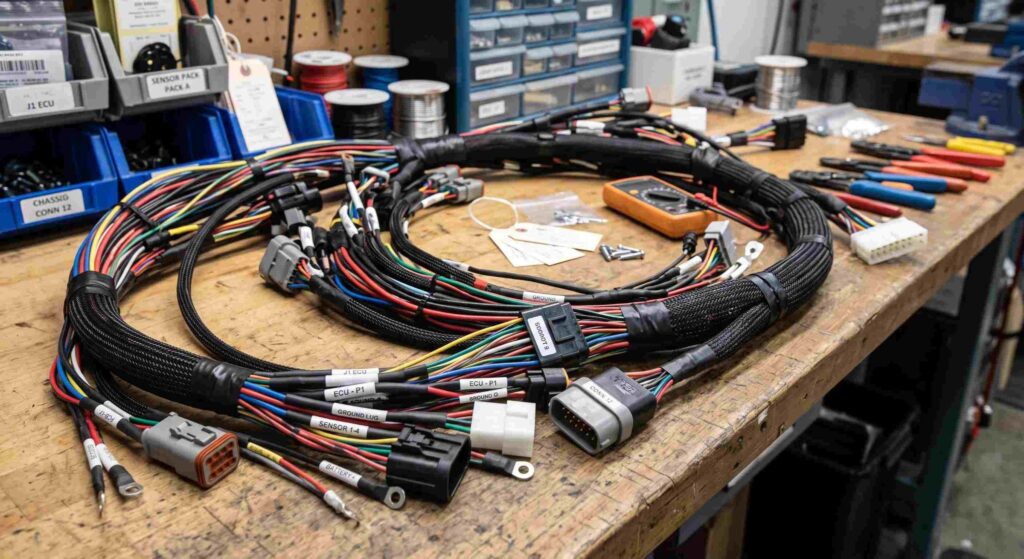
Not all components require clean room assembly or intense automated testing. Some parts are simply labor intensive by their very nature. When you look at your total bill of materials, you have to route parts to facilities that match the required cost structure and volume expectations.
For mid to high volume commercial goods, buyers frequently look to Southeast Asia to balance labor costs with acceptable quality standards. Developing a supplier relationship for a wire harness in Thailand gives buyers access to a skilled labor pool that keeps manual assembly costs manageable. At the same time, these facilities generally maintain the standard ISO certifications required by major consumer electronics brands. It provides a practical balance of cost efficiency and reliable output for parts that require significant human handling during production.
Redesigning for Component Flexibility
Supply chain reliability actually starts in the engineering phase, long before a purchase order is ever cut. If your new product is designed around a single proprietary microchip, your procurement team can’t save you when that specific chip goes out of stock globally. They will just be stuck calling brokers and paying massive markups.
Smart hardware teams are designing circuit boards with alternate pad layouts right from the start. If your primary component is unavailable, an alternate component can be soldered onto the exact same board without requiring a full engineering redesign or recertification. This takes more work upfront. The engineering team has to validate multiple components for the exact same function. But that initial investment in engineering time pays off immediately when a supplier quotes a 52-week lead time for your primary part. Flexibility at the board level translates directly to flexibility in sourcing.
Upgrading Inventory Strategy
Just in time manufacturing was the absolute gold standard for decades. It kept costs near zero and made financial models look incredibly efficient. Then the reality of global shipping delays and silicon shortages hit the industry hard.
Now, hardware businesses are holding strategic buffer stock for their most critical components. You don’t need to hold a year of inventory for standard resistors or generic plastic enclosures. Instead, you identify the active components with the longest lead times, the custom silicon, or the parts with the highest risk of disruption. You hold a safety buffer of those specific, hard to replace items. Yes, it ties up working capital. But it guarantees your assembly line keeps moving while your competitors are stuck waiting on backordered parts.
Continuous Auditing and Supplier Communication
A contract manufacturer is a business partner. They aren’t a vending machine. You can’t simply email a purchase order and assume a shipping container will arrive perfectly six months later. Reliable supply chains require constant, active visibility.
You need regular check-ins on material availability, labor constraints, and even the financial health of your core suppliers. A good procurement manager knows the account managers at their key suppliers on a first name basis. They also take time to understand their suppliers’ own supply chains. If your manufacturer relies entirely on a single raw material provider, their bottleneck becomes your bottleneck. You have to map those lower tiers to understand exactly where your blind spots are. The companies that survive disruptions are the ones that saw them coming three tiers down the chain.