How Can You Build a More Flexible European Electronics Supply Chain?

American electronics manufacturers are rethinking their global footprints. Relying on a single factory in Shenzhen or Penang worked well when ocean freight was cheap and lead times were predictable. That environment is largely gone. Today, hardware companies look at Europe not just as a lucrative end market, but as a necessary and resilient manufacturing base. Building a flexible electronics supply chain in Europe requires understanding the specific strengths of different regions. You have to accept that you will likely manage a distributed network rather than hand everything over to a single mega factory.
Rethinking the Mega Factory Model
The standard approach to outsourced manufacturing was finding one massive Electronic Manufacturing Services provider to handle everything from board stuffing to final box build. In Europe, flexibility comes from regional specialization. The continent is industrially fragmented, which is actually a strength if you know how to use it. You get better agility by matching specific component needs to the regions that have spent decades perfecting them.
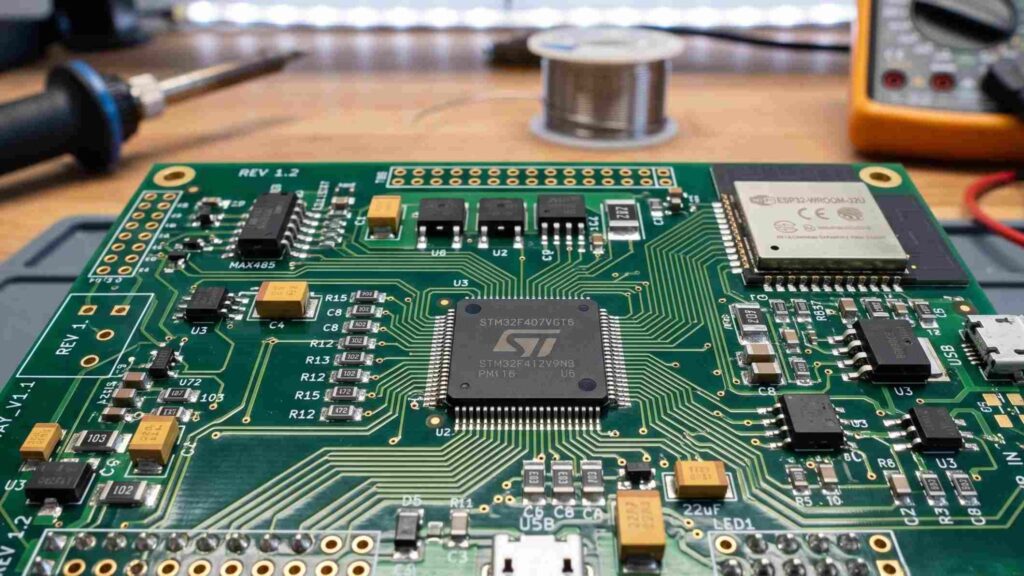
Take bare board manufacturing. If you need quick turn prototypes or high-mix, low-volume runs, the Baltic region has developed a highly capable tech ecosystem. Sourcing PCB production Lithuania gives companies access to automated facilities that cater to the industrial and telecommunications sectors. They typically do not enforce the rigid volume minimums you often see in traditional offshore hubs. The direct labor costs are higher, but the fast turnaround time offsets the unit cost difference when you factor in reduced inventory carrying costs and the elimination of expensive air freight. You can iterate hardware revisions in days rather than weeks.
Tapping into Legacy Industrial Hubs
Flexibility also means removing bottlenecks in sub assemblies. Custom cables and physical interconnects are notorious for holding up final product assembly. Instead of waiting on a shipping container of custom cables, smart procurement teams look to regions with a deep history of automotive and heavy machinery manufacturing.
When you need complex assemblies that require strict reliability standards, looking at wiring harness Italy makes a lot of practical sense. Northern and central Italy house a massive tier two supplier base that grew up supporting the demanding European automotive, automation, and aerospace sectors. These facilities know how to handle complex routing, specialty connectors, and stringent testing protocols. Working with these localized suppliers means you can test physical samples quickly. You get the quality assurance of a legacy industrial market without the massive transit delays.
Buffer Stock and Component Staging
Regional manufacturing networks only work if you have the right parts ready to assemble. The European electronics market relies heavily on a few key distribution hubs located primarily in Germany and the Netherlands. Relying on just-in-time delivery for critical silicon is a massive risk.
You cannot run lean on active components right now. True supply chain flexibility is created by holding buffer stock at strategic locations near your assembly partners. If your final assembly is in Eastern Europe and your custom injected plastics are coming from the Mediterranean, your microcontrollers need to be sitting in a warehouse no more than a day away. Owning your critical inventory and placing it near the assembly floor gives you the power to change production schedules on short notice. If you rely entirely on your contract manufacturer to procure and hold every part, you surrender that agility entirely.
Strategic Redundancy in Eastern Europe
Agility is great for prototyping, but you still need scale. Once a product moves from high-mix to steady volume, you need a region that handles capacity without losing the ability to throttle production up or down based on market demand. Massive facilities in Asia can be incredibly rigid once a production schedule is locked.
Eastern Europe serves as the volume engine room for European electronics. Facilities here offer an excellent balance of technical engineering talent and scalable manufacturing labor. For instance, shifting volume PCB production Romania allows US hardware companies to scale up manufacturing for the European market locally. The proximity to major German and French industrial distribution centers means finished boards can move via truck in a day or two. You capture the volume benefits of a traditional offshore setup while maintaining a much tighter loop on quality control. If a defect is found, you can halt a truck and fix the process. You cannot easily halt a cargo ship halfway across the Pacific.
Tooling and Intellectual Property Control
When you spread production across multiple countries, tooling ownership becomes a critical operational detail. You need the ability to pick up a project and move it to a different facility if a supplier falls behind or faces financial trouble. Flexibility means never being locked into a single vendor because they hold your physical manufacturing assets hostage.
Make sure your contracts explicitly state that your company owns the test fixtures, injection molds, and final assembly jigs. Have a secure, central repository for all Gerber files, bills of materials, and automated testing protocols. If a facility in one country faces a sudden labor strike or local power issue, a truly flexible supply chain allows you to transfer those digital and physical assets to a pre approved backup facility.
The Reality of European Logistics
Moving goods across the European Union is generally seamless due to the single market and lack of internal customs borders. However, it is not flawless. You have to account for regional holidays, driver shortages, and the simple reality that commercial trucking routes can get bottlenecked.
Importing specialized parts from the US into this European network also requires careful customs staging. Getting goods cleared at major ports of entry like Rotterdam or Frankfurt takes time, and improper paperwork will strand your components in customs warehousing.
Do not plan your supply chain using best case scenario transit times. Build a calculated buffer into your logistics planning. A flexible chain absorbs minor logistical shocks without shutting down the assembly line. Managing a European supply chain requires more hands-on oversight than relying on a single turnkey factory. The tradeoff is a resilient, localized network that keeps shipping products when global freight lanes inevitably shut down.