How to Identify Dangerous Branches
Trees add beauty and shade to any property—but a damaged or unstable branch overhead is a serious hazard. Falling limbs can injure people, damage roofs, and bring down power lines without much warning. Knowing what to look for can help you act before something goes wrong. And when the risk is too great to handle alone, calling in a professional for Tree Removal in North Sydney is always the right call.
Visual Warning Signs
Start with a simple visual scan of your trees. Some warning signs are obvious; others require a closer look.
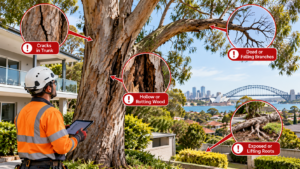
- Cracks and splits running along a branch or where it meets the trunk are red flags. These fractures weaken the wood’s structure significantly.
- Discoloration or sunken bark can indicate internal decay that isn’t always visible on the surface.
- Fungal growth—like mushrooms or bracket fungi appearing on or near a limb—is a strong sign of rot. Fungi feed on decaying wood, meaning the branch may already be compromised deep inside.
If you notice any of these signs, don’t ignore them. What looks like a minor issue on the outside can mask serious structural damage within.
The “Dead Wood” Test
Dead branches are among the most common causes of property damage and injury. Unlike healthy wood, dead limbs don’t flex—they snap.
Here’s how to spot them:
- No leaves during the growing season is a clear indicator. A branch that stays bare while the rest of the tree leafs out is almost certainly dead.
- Brittle, dry bark that flakes or falls away easily suggests the wood has dried out and lost its strength.
- A hollow sound when tapped lightly can indicate that the interior has rotted away.
Dead branches can fall even on calm days. They don’t need a storm as an excuse. A Branch Out Tree Specialist can confirm whether a limb is truly dead and advise on the safest removal method.
Structural Weaknesses to Watch For
Not all dangerous branches look obviously damaged. Sometimes the threat lies in how the tree has grown.
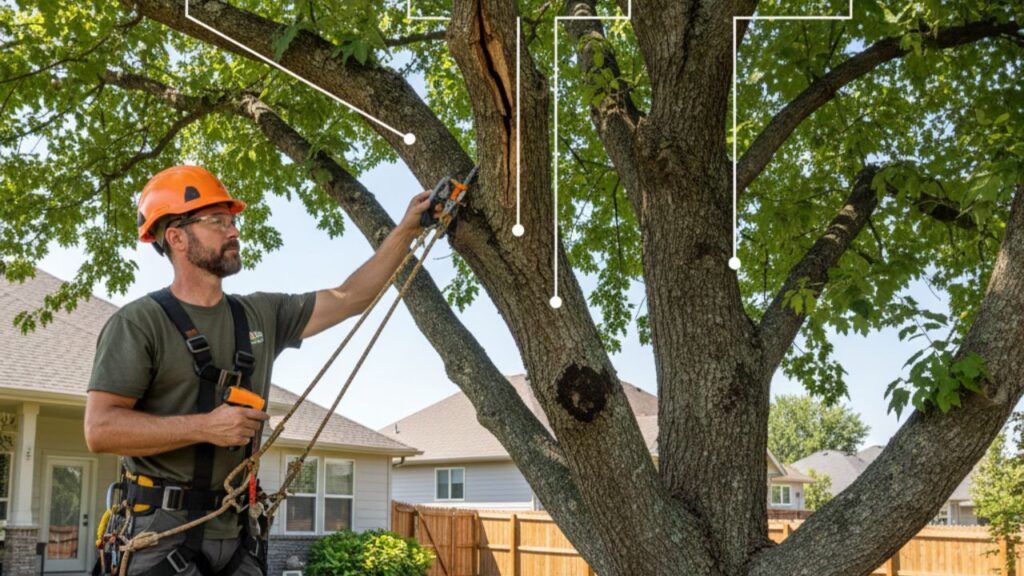
Tight V-shaped unions—where two branches or stems grow closely together at a sharp angle—are particularly prone to splitting. Unlike the stronger U-shaped unions, V-shaped forks trap bark between the stems, creating a weak attachment point that can give way under weight or wind.
Overextended heavy branches are another concern. When a long limb grows too far from the trunk without adequate taper, it puts enormous strain on the attachment point. These branches sag visibly and are prone to sudden failure.
Storm Damage Assessment
After heavy wind, rain, or storms, always walk your property and inspect your trees carefully. Look for:
- Hanging limbs—also called “widow makers”—that are caught in the canopy above and could fall at any time.
- Split or torn bark at branch junctions, which signals that the wood has already partially failed.
- Leaning branches that weren’t there before the storm, suggesting root or structural damage.
Don’t attempt to remove storm-damaged branches yourself, especially large ones under tension. Unpredictable movement during cutting can cause serious injury. This is exactly when professional Tree Removal in North Sydney becomes essential.
When to Call a Professional
Some situations genuinely require expert eyes and equipment. Contact a Branch Out Tree Specialist if you notice:
- Multiple warning signs on the same tree
- Branches hanging over your home, vehicle, or areas where children play
- A tree that has partially uprooted or is visibly leaning after a storm
- Any signs of advanced decay or fungal activity near the trunk
A qualified arborist will assess the full health of the tree, not just the visible damage, and recommend the safest course of action—whether that’s pruning, bracing, or full Tree Removal in North Sydney.
Conclusion
Identifying dangerous branches early is one of the most effective ways to protect your home, your family, and your neighbors. Regular visual checks, especially after storms, go a long way toward catching problems before they escalate.
That said, tree safety has its limits as a DIY task. When branches are large, high off the ground, or showing serious signs of decay, professional intervention isn’t just helpful—it’s necessary. A Branch Out Tree Specialist brings the training, tools, and experience to handle hazardous trees safely and efficiently. Don’t wait for a branch to fall before taking action.