The Materials Behind the Renewable Energy Buildout
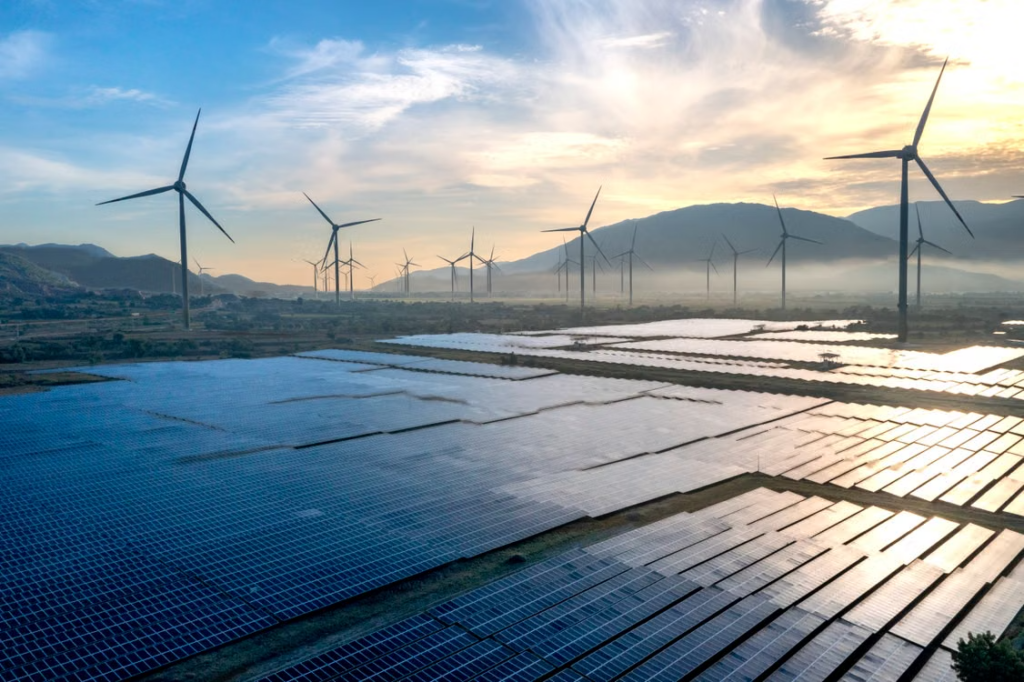
Renewable energy is often discussed through visible technologies: solar panels, wind turbines, batteries, and transmission lines. Yet each depends on a much broader industrial base. Steel, concrete, copper, aluminum, glass, silicon, polymers, and composites carry loads, conduct electricity, store energy, and protect equipment from the elements.
Steel service centers such as Premium Plate form part of this wider supply chain, providing mill-certified carbon, alloy, HSLA, and stainless steel plate used in energy and industrial projects.
A Renewable Project Is a Materials System
No single material can meet every project requirement. Selection depends on whether a component must carry weight, conduct power, resist corrosion, store energy, or remain light enough to move.
| Material | Typical uses | Primary contribution |
| Steel | Wind towers, equipment supports, transformer tanks, skids, substations, and connection plates | Strength, stiffness, weldability, and formability |
| Concrete | Turbine foundations, pads, access infrastructure, and ballast | Mass, anchorage, and compressive strength |
| Copper and aluminum | Cables, conductors, busbars, windings, and module frames | Electrical conductivity and lower weight where aluminum is used |
| Glass, silicon, and polymers | Solar cells, glazing, encapsulation, insulation, and protective layers | Energy conversion and environmental protection |
| Composites and specialty minerals | Wind blades, permanent magnets, and battery electrodes | Low weight, magnetic performance, or energy storage |
The U.S. Department of Energy’s solar manufacturing overview reflects this wider system. Panels still need racking, wiring, inverters, electrical equipment, and a grid connection before their output becomes usable.
Where Steel Plate Carries the Load
Wind energy is one of the clearest plate-intensive applications. Thick plate can be rolled into tapered tower sections and used for base plates, flanges, internal platforms, and equipment supports. Offshore projects add foundations and transition structures exposed to waves, saltwater, and repeated loading.
Solar projects use plate more selectively. Panels rely mainly on glass, silicon, polymers, and aluminum, while steel plate may appear in tracker-drive supports, equipment skids, base plates, gussets, and substation structures. Lighter members often use sheet, tubing, or cold-formed sections, so plate should be specified where its thickness and load capacity are genuinely needed.
The grid connection expands the material scope. Substations require transformer tanks, switchgear supports, structural bases, protective housings, and equipment platforms. Battery storage sites also need foundations, enclosures, thermal-management equipment, electrical skids, and fire-protection infrastructure.
When sourcing energy industry steel plates, the useful question is what the plate must do within the system. It may need to carry a static load, resist fatigue, form a curved shell, accept a welded connection, or withstand prolonged outdoor exposure.
Why Durability Matters
Renewable assets are expected to operate outdoors for decades, often where repairs are difficult or expensive. Material selection therefore affects safety, maintenance planning, and long-term cost.
A wind tower responds to vibration, changing wind loads, temperature shifts, and repeated stress cycles. Solar structures face wind uplift, moisture, dust, and thermal expansion. Coastal installations add salt exposure, while storage and substation equipment may encounter heat, chemicals, electrical faults, or standing water.
The best plate is not automatically the strongest grade available. Engineers must balance:
- strength and stiffness for the expected load;
- toughness and fatigue resistance for repeated loading;
- weldability, formability, corrosion resistance, and compatibility with the coating system.
Over-specification adds cost and weight. Under-specification can shorten service life or create avoidable repair work. The correct choice matches the grade, thickness, surface condition, and fabrication route to the component’s actual risks.
A coated carbon or HSLA plate may suit many structural applications. Stainless steel can be justified where corrosion exposure or limited maintenance access makes its higher initial cost worthwhile. An alloy plate may address a specific combination of strength, toughness, or temperature performance.
Processing Turns Plate into Usable Components
A certified grade is only the starting point. Poor cut quality, inconsistent bevels, incorrect rolling radii, or unclear part identification can delay fabrication even when the base material is correct.
Several processing steps directly affect downstream work:
- High-definition plasma cutting produces repeatable profiles, holes, slots, and connection geometry.
- Beveling prepares weld edges consistently and reduces manual grinding before fit-up.
- Rolling, forming, blasting, and priming establish the required shape and surface condition.
Coordinating these operations before shipment reduces handling and gives fabricators a plate that is closer to the drawing. It does not replace welding, assembly, or field erection. It removes avoidable preparation from the next stage.
Repeatability becomes especially important when a project requires many similar parts. A small dimensional inconsistency may be manageable on one component but disruptive across dozens of tower sections, supports, or equipment bases.
Traceability Matters at Project Scale
Large energy projects may involve several mills, service centers, fabricators, coating contractors, logistics providers, and installation teams. Documentation must remain connected to the physical material as it moves through that chain.
Mill test reports record the certified chemical and mechanical results associated with the plate. Stenciled identifiers and process tracking preserve that connection after cutting, beveling, forming, or surface preparation. This supports incoming inspection and fabrication quality control without treating all steel of a similar size as interchangeable.
Traceability also helps procurement teams manage phased deliveries and proposed substitutions. Buyers can compare available material with the engineering specification using verified grade, thickness, and processing records rather than assumptions.
Clean Energy Still Depends on Heavy Industry
Renewable energy changes how electricity is produced, but it does not remove the need for mills, service centers, fabricators, electrical manufacturers, logistics providers, and field contractors. Turbines, solar arrays, substations, and storage facilities emerge from a long chain of physical production.
That chain works best when each material is used where it performs well, processed to the required geometry, and supplied with reliable documentation. Cleaner power may be driven by new technology, but the infrastructure behind it still depends on disciplined material selection and industrial capacity at scale.