MOPA Laser Color Marking Guide 2026
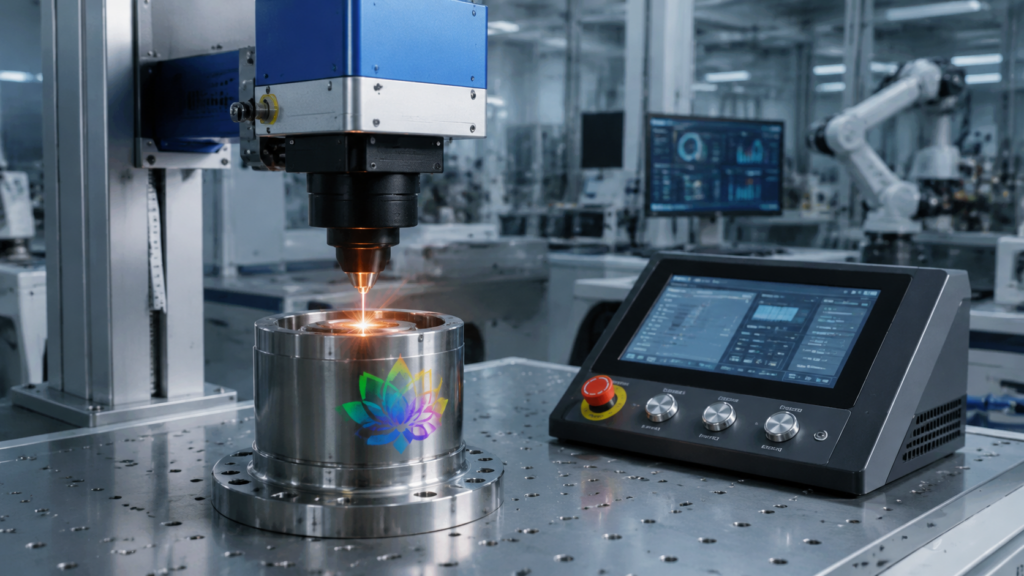
Someone in a Facebook group posted a photo last year of a stainless steel tumbler with a deep gold logo on it. Not gold paint. Not a decal. The color was in the metal. Dozens of people asked the same question in the comments: how did you do that.
The answer was a MOPA laser. And most of the people in that thread had never heard of one.
That is still true today for a lot of small business owners who use regular fiber lasers. They know what a fiber laser does. They mark steel parts and aluminum enclosures and the results are great. But color? On metal? That sounds like something from a completely different category of equipment.
It is not. MOPA is a variant of the same fiber laser technology. The difference is one parameter that unlocks a capability standard fiber lasers do not have.
The One Thing That Makes MOPA Different
Standard fiber lasers have a fixed pulse duration. You can change the power, the frequency, the scan speed. The length of each individual laser pulse stays the same no matter what you do.
MOPA adds control over pulse duration as a separate variable. You can run 2 nanosecond pulses or 500 nanosecond pulses. You can change that independently of everything else. That single additional control is what separates a MOPA from a standard Q-switched fiber laser.
Why does pulse duration matter for color? Because the color you get on stainless steel or titanium is determined by how thick an oxide layer forms on the surface. Different oxide thicknesses reflect different wavelengths of light. The thickness of that oxide layer depends on how quickly the energy is delivered and how hot the surface gets. Pulse duration controls that.
A standard fiber laser cannot produce the right conditions for vivid color marks because its pulse duration is fixed. MOPA can dial in exactly the right conditions for gold, blue, red, or purple because it has that extra variable to work with.
How the Colors Actually Form
The colors on MOPA-marked stainless steel are interference colors. There is no pigment involved. The laser creates a very thin transparent oxide layer on the metal surface. Light reflects off the top of that layer and off the metal surface beneath it. Those two reflections interfere with each other.
Depending on the thickness of the oxide layer, different wavelengths get amplified and others cancel out. A layer of one thickness looks gold. A slightly thicker layer looks blue. Thicker still and you get red or purple. Keep going and you cycle back through different shades again.
The operator controls the color by controlling the parameters that determine oxide thickness. Pulse duration is the main lever. Frequency, power, and scan speed all contribute. Most MOPA systems ship with starting parameter sets for common colors on common materials. You test mark on scrap from the same batch, adjust from there, save the parameters that work, and the process is repeatable from that point.
- Gold on stainless steel comes from relatively low-energy short-pulse settings
- Blue requires a slightly thicker oxide layer, achieved with different frequency and duration combinations
- Red, purple, and magenta sit at higher oxidation levels
- Black is available on both standard and MOPA systems through a higher-energy ablation process
- White comes from high-speed ablation that creates a rough surface which scatters light
Titanium Is Worth a Separate Mention
Titanium produces color through the same interference mechanism but the results are more dramatic and the color range is wider than stainless steel. Titanium naturally forms an oxide layer when exposed to air. Laser heating accelerates that process in a precise and controllable way.
At lower temperatures you get gold and yellow. As the temperature increases through carefully controlled laser parameters you move through bronze, purple, blue, and eventually gray. The laser controls the temperature by controlling the energy delivered per unit area. Get it right and the color sits exactly where you want it in the design.
This is why titanium jewelry looks the way it does when it has colored sections. That deep blue section on a titanium ring is not dye or anodizing. It is laser-induced surface oxidation with the color determined by temperature and controlled by a MOPA laser.
Who Actually Needs a MOPA Laser
This is the question most people skip and then regret. MOPA lasers cost more than standard fiber lasers. The premium runs roughly 30 to 50 percent depending on power level and configuration. That is not nothing. You should be clear on whether you actually need the capability before paying for it.
You probably need MOPA if
- You are selling jewelry or accessories with colored metal elements and customers are specifically asking for color
- You are making premium branded merchandise where a gold or colored logo on stainless is part of the product value
- You are doing titanium work where color marking is central to the aesthetic
- You are engraving on thin materials where the heat control of adjustable pulse duration prevents burning or warping
- You have customers turning down standard black marks because they want color options
You probably do not need MOPA if
- Your metal marking is primarily serial numbers, traceability codes, and logos in black or gray
- Your customers have not asked for color and it is not part of your product offering
- You are marking industrial parts for compliance and traceability purposes
- Budget is a real constraint and the 30 to 50 percent premium does not have a clear payback in your current product line
Start with a standard fiber laser if color is not a current requirement. Upgrade when demand for it is real and consistent, not speculative.
What MOPA Color Marking Gets Used For
Jewelry
Titanium rings with gradient color transitions. Stainless steel pendants with gold accent marks. Personalized bracelets with colored initials. The jewelry market was one of the first to adopt MOPA technology because color on metal at this level of quality was simply not possible by any other means at an accessible price point.
Premium Branded Products
A company logo in gold on a brushed stainless steel flask reads differently than the same logo in black. Premium corporate gifts, limited edition branded merchandise, and high-end promotional products use MOPA color marking to signal quality in a way that standard laser marks do not.
Consumer Electronics and Decorative Components
Watch cases, eyeglass frames, phone accessories, and other consumer products with metal components use MOPA marking for decorative color elements and brand identification. The marks are permanent, scratch-resistant, and do not add any thickness to the surface.
Color Coded Industrial Parts
Some production environments use color coding on metal components for assembly guidance or to differentiate part variants. MOPA color marks are more durable than paint or labels and can be applied in the same workflow as traceability marking.
Practical Tips Before You Buy
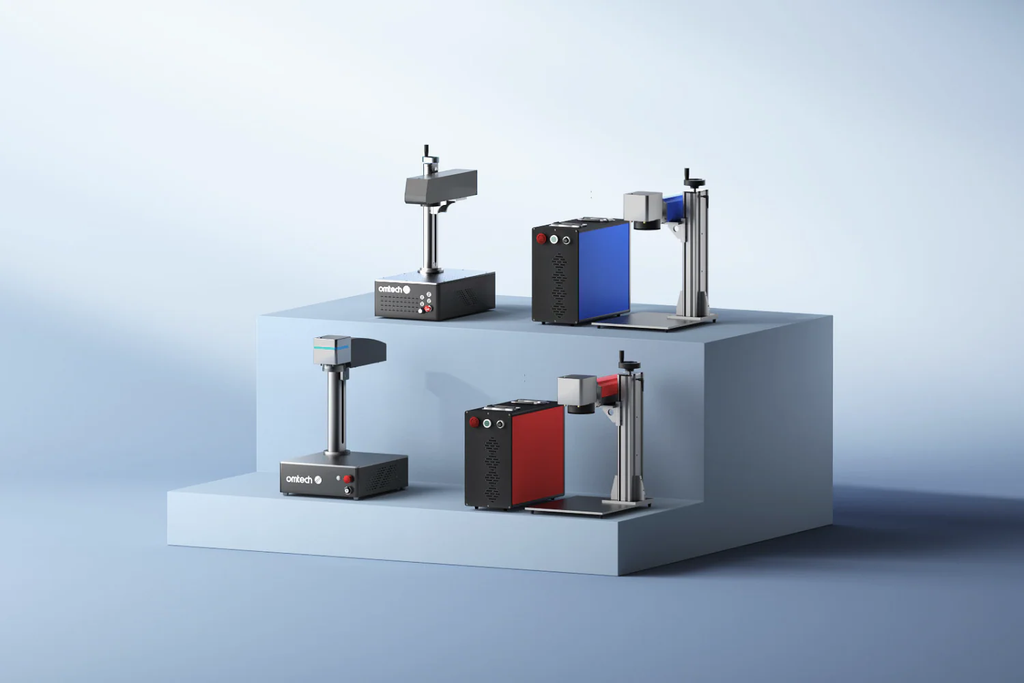
The MOPA market has a wide quality range at similar price points. MOPA fiber laser engravers from established manufacturers include parameter libraries for common color applications, documented pulse duration ranges, and support for dialing in new materials.
- Check the pulse duration range. For color marking on stainless you want the system to cover at least 2ns to 200ns
- Verify the frequency range. Color marking typically operates between 20kHz and 200kHz
- Confirm the software saves and recalls parameter sets reliably. You need consistent repeatability across production runs
- Ask the supplier to mark a sample of your specific material before you buy. Any reputable supplier will do this
- Factor in the full setup cost. Ventilation, workspace, and any fixturing needed for your parts
Conclusion
MOPA lasers do something that impresses people when they first see it. Color on metal without chemicals or coatings. The technology is real, the results are durable, and the process is repeatable once you have your parameters dialed in.
Whether you need one is a practical question. If color marks on metal are part of what you sell or what customers are asking for, MOPA pays for itself. If your work is black serial numbers and logos on steel, a standard fiber laser costs less and does the job.
Know your product line. Buy the machine that fits it today.
About OMTech
OMTech is a laser equipment company based in Anaheim, California. The company makes CO2 laser engravers, standard fiber laser markers, and MOPA fiber laser systems for small businesses and production environments across the United States. More information is available at OMTech.
The MOPA product line covers 20W to 100W configurations with pulse duration control ranges suited for color marking on stainless steel, titanium, and anodized aluminum. OMTech machines are used by jewelry businesses, premium product manufacturers, and contract shops offering metal marking services.