How Plastic Pallets Support Safer Warehousing in Australia
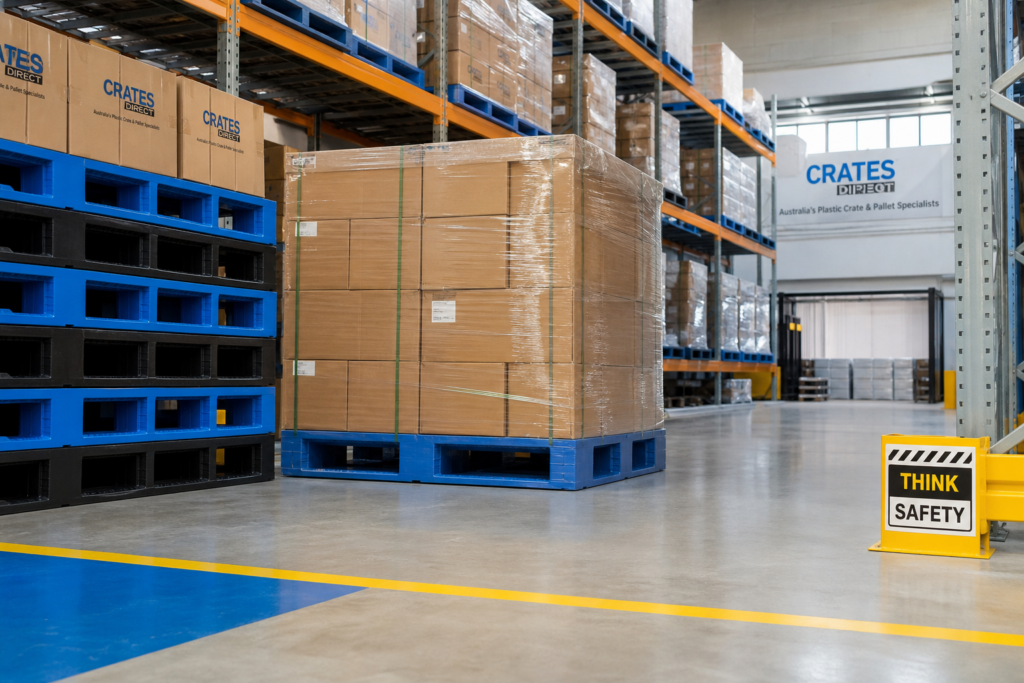
Warehouses rely on everyday equipment that performs consistently under pressure. Pallets are one of the simplest examples, but they influence safety, product protection and the speed of movement across a facility. For operations that handle repeated storage, transport and racking cycles, heavy duty plastic pallets are often considered where strength, hygiene and consistency are important. The right pallet choice can reduce avoidable handling issues and support smoother movement through Australian supply chains.
Why pallet choice affects warehouse performance
A pallet is more than a base for moving goods. It affects how stock is received, stored, picked, transported and dispatched. In busy warehouses, pallets may pass through forklifts, pallet jacks, racking systems, loading docks and trucks several times in one cycle.
When pallets are inconsistent in size, weight or condition, small issues can slow down the whole process. Damaged surfaces, unstable bases or irregular dimensions can increase manual handling and make loads harder to secure. A consistent pallet platform helps teams keep workflows predictable, especially in high-volume storage and distribution settings.
Load stability and handling safety
Load stability is central to warehouse safety. A pallet must support the weight of goods while remaining compatible with handling equipment and storage systems. If it flexes excessively, cracks under load or sits unevenly, the risk of product movement increases.
Plastic pallets are often selected where dimensional consistency matters. Their uniform construction can help goods sit evenly when the pallet is matched to the load rating and application. This is particularly relevant in racking, where pallet design, weight distribution and support points need to work together.
Safe use also depends on inspection routines. Even durable pallets should be checked for cracks, deformation or contamination before use. A strong pallet is only effective when it is used within its intended limits.
Hygiene and cleaning considerations
Cleanliness is important in sectors such as food handling, pharmaceuticals, retail distribution and healthcare supply. Pallets used in these environments may be exposed to spills, dust, moisture or temperature changes.
Plastic pallets can offer hygiene advantages because they are generally non-porous and easier to clean than untreated timber. This can reduce the chance of residue being trapped in the pallet structure. For facilities with wash-down processes or strict housekeeping standards, cleanable surfaces can support more consistent site practices.
Reuse, lifecycle value and waste reduction
Pallet costs are not limited to purchase price. Businesses also need to consider replacement frequency, product damage, disposal, repair time and handling delays. A pallet with a longer usable life may offer better value if it reduces repeated replacement and waste management tasks.
Reusable pallet systems can support waste reduction goals, particularly in closed-loop or repeat transport environments. Pallets can be returned, inspected and reused across predictable delivery routes or internal movements between sites. This can suit manufacturers, retailers and distributors that have regular stock flows.
Lifecycle value should be assessed against real operating conditions. The best option depends on load type, travel distance, storage method, hygiene needs and whether pallets are likely to return after use.
Export and compliance factors
Export movements can introduce additional pallet requirements. Businesses may need to consider border rules, quarantine controls and the demands of long-distance transport. Timber pallets may require treatment for some international movements, while plastic pallets can avoid certain timber-related treatment issues.
This does not remove the need for proper documentation or destination-specific checks. Exporters should confirm requirements for each market, product type and freight method. A pallet that works well domestically may not suit every export pathway.
Practical checks before changing pallet systems
Before moving to a new pallet type, businesses should review how pallets are actually used on site. This includes checking forklift compatibility, racking dimensions, transport requirements, load weights and cleaning processes. Trialling pallets in real operating conditions can reveal issues that may not appear in a specification sheet.
Warehouse teams should also document inspection standards and removal criteria for damaged pallets. Clear rules help staff decide when a pallet remains fit for use and when it should be repaired, recycled or removed from circulation. A well-matched pallet system supports safer handling, cleaner operations and more predictable movement of goods across the warehouse floor.