What Happens When Robots Start Building Other Robots
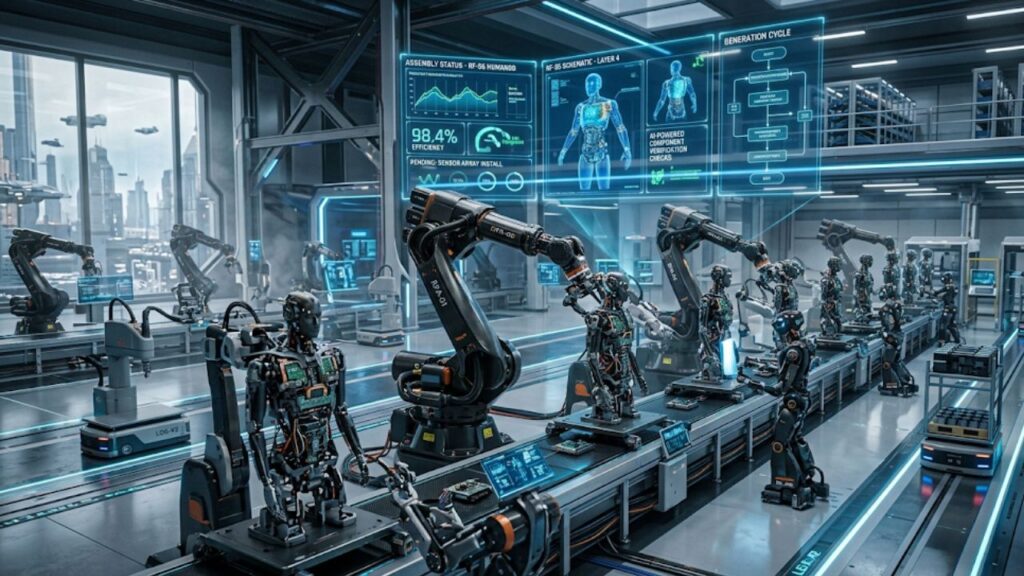
For most of industrial history, machines built products and humans built machines. That neat division is starting to dissolve. Robots now assemble other robots on factory floors, software writes the code that runs them, and automated systems increasingly design the next generation of hardware with little human input. The idea of machines making machines is no longer a thought experiment from an old novel — it is a quiet shift already underway, and its consequences reach far beyond the factory into how economies, jobs, and even entertainment will work.
The Line We Are Already Crossing
It is tempting to picture robots building robots as a single dramatic moment, but the reality is gradual. Modern car plants already use robotic arms to assemble components that go into other robots, and chip factories run almost entirely on automated equipment that humans merely supervise. Each step removes a little more direct human labour from the loop. What makes the current moment different is that artificial intelligence is starting to handle the design and decision-making, not just the physical assembly, which pushes the cycle toward something genuinely self-sustaining.
Why This Changes Everything
When a system can build working copies of itself, growth stops being limited by how many people you can hire and train and starts being limited only by raw materials and available energy. That single shift carries enormous consequences, and they are worth spelling out clearly because they touch nearly every part of how production works today. Each one would matter on its own, but they tend to arrive together and reinforce each other, which is what makes the change feel so sudden once it gathers pace.
The Risks Nobody Should Ignore
A self-improving production cycle is powerful, which is exactly why it deserves caution rather than blind enthusiasm. The danger is not the science-fiction nightmare of machines turning hostile, but quieter and more practical problems. Concentrated control could hand enormous economic power to whoever owns the first truly self-replicating systems. Sudden shifts in what factories need could leave millions of workers stranded. And a process designed to scale itself can scale its mistakes just as efficiently as its successes if the safeguards are weak.
Where Entertainment Quietly Fits In
The same automation reshaping factories are also rebuilding the systems behind digital entertainment, where software now generates, tunes, and balances experiences with barely any human touch. A well-known operator such as vulkan bet hints at where this leads — the machinery running these experiences increasingly looks after itself, with algorithms adjusting live odds the instant a match shifts, automated tools rolling out fresh slots and shaping each casino bonus around real player behaviour, and self-correcting systems keeping live tables and sports markets running smoothly around the clock without a person manually pulling levers. As the engines that build and maintain these experiences grow more self-sufficient, the gap between a game designed by people and one refined by machines keeps narrowing, and the player placing a wager rarely notices where the human work ends and the automated work begins.
How Different Fields Feel the Shift
The effects of machines building machines will not arrive evenly across the economy. Some industries will transform almost overnight, while others will barely notice the shift for years to come. The differences come down to how physical, how heavily regulated, and how data-driven each field already is, since those three traits decide how easily automation can take hold. A few clear patterns are already emerging that hint at which sectors should brace for change soonest and which have a little more breathing room.
- Manufacturing and logistics will change first and most deeply, since they already run on automation and stand to gain the most from self-building systems.
- Healthcare and construction will adopt the technology more slowly, held back by safety rules and the messy unpredictability of the real world.
- Software and digital services will feel an indirect but powerful push, as cheaper hardware makes ambitious computing projects suddenly affordable.
Preparing for a Self-Building World
None of this means humans become irrelevant, but our role clearly changes. Instead of assembling and coding by hand, people will increasingly set goals, define limits, and decide what these self-building systems should and should not do. The most valuable skills shift toward oversight, ethics, and design rather than repetitive labour. Societies that invest early in education, sensible regulation, and shared ownership of these systems will adapt far more comfortably than those that simply let the technology arrive and hope for the best.
Key Findings and Future Perspectives
Robots building robots is not a distant fantasy but an unfolding reality that will reshape how nearly everything gets made. The technology promises cheaper goods, faster progress, and possibilities we cannot yet picture, while carrying real risks around control, inequality, and unchecked scale. The outcome is not decided in advance. It depends on the choices made now, while the cycle is still young enough that human hands can shape the direction it ultimately takes.