The Science Behind Dry Ice: What It Is & How It Works
Dry ice is one of those materials that feels almost magical the first time you encounter it. It smokes, it disappears, and it behaves in ways that defy what we normally expect from ice. Yet behind this dramatic behavior lies well-established science, rooted in chemistry and thermodynamics. Despite its usefulness in industry, science, and logistics, dry ice is often misunderstood or misused, leading to safety concerns and inefficiencies.
This article explores the science behind dry ice through a clear problem-and-solution structure, explaining what dry ice is, how it works, why it behaves so differently from water ice, and how its unique properties solve real-world challenges. By understanding the science, users can better appreciate both its power and its limitations.
The Problem: A Widespread Misunderstanding of Dry Ice
Many people assume dry ice is simply frozen water under a different name, or they treat it like regular ice with a colder temperature. This misconception leads to improper handling, unrealistic expectations, and sometimes dangerous situations. Dry ice does not melt, cannot be stored like normal ice, and behaves unpredictably if used without proper knowledge.
The lack of understanding becomes a real problem in industries that depend on controlled temperatures, contamination-free cleaning, or specialized cooling solutions. Without knowing how dry ice works at a molecular level, it is easy to misuse it or overlook its advantages.
What Dry Ice Really Is
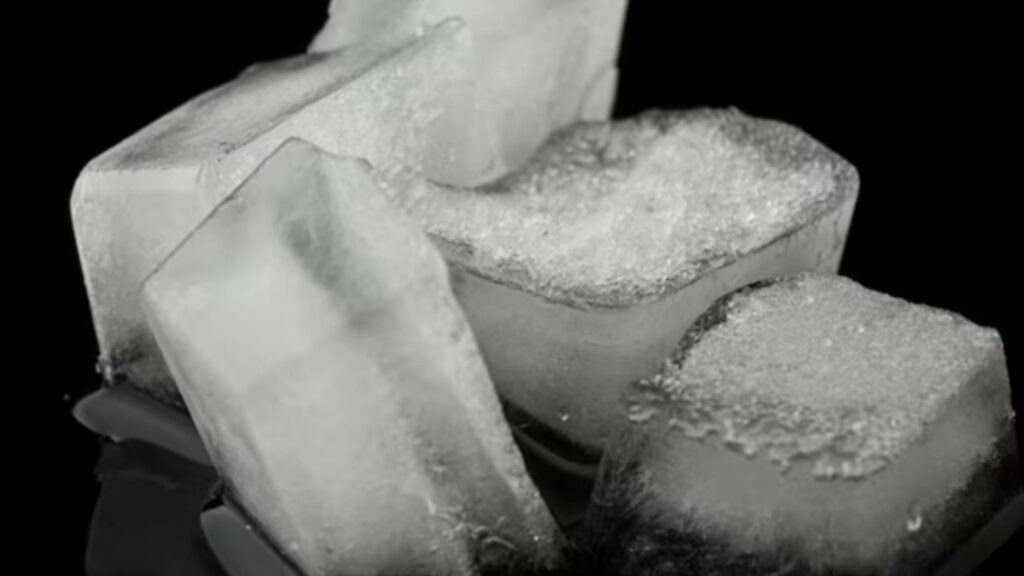
Dry ice is the solid form of carbon dioxide (CO₂). Unlike water, carbon dioxide does not exist as a liquid at normal atmospheric pressure. When CO₂ is cooled and compressed, it transitions directly from a gas to a solid. This process creates dry ice, which appears as white, opaque blocks or pellets.
The temperature of dry ice is approximately −78.5°C (−109.3°F), making it significantly colder than traditional ice made from frozen water. This extreme cold is one of the defining features that gives dry ice its unique behavior and applications.
Why Dry Ice Does Not Melt
One of the most confusing aspects of dry ice is that it never turns into a liquid under normal conditions. Instead of melting, it undergoes a process called sublimation, where it transitions directly from a solid to a gas.
This happens because carbon dioxide’s phase diagram does not allow a liquid state at atmospheric pressure. As dry ice absorbs heat from its surroundings, the solid CO₂ skips the liquid phase entirely and becomes carbon dioxide gas. This is why dry ice leaves no residue behind, solving problems where moisture would be undesirable.
The Solution: Sublimation as a Scientific Advantage
Sublimation is not just a curiosity; it is a solution to multiple industrial challenges. Because dry ice turns directly into gas, it eliminates the mess, water damage, and cleanup associated with melting ice. This makes it ideal for situations where dryness and cleanliness are critical.
For example, temperature-sensitive products such as pharmaceuticals, biological samples, and frozen foods can be transported without risking water exposure. Once the dry ice sublimates, there is nothing left to dispose of except carbon dioxide gas, which disperses into the air.
The Physics Behind the “Smoke” Effect
The fog-like cloud often seen around dry ice is not carbon dioxide itself. CO₂ gas is invisible. The visible vapor is actually condensed water droplets from the surrounding air. When dry ice sublimates, it rapidly cools the air nearby, causing moisture in the air to condense into tiny droplets that appear as white fog.
This phenomenon explains why dry ice is commonly used for theatrical effects and demonstrations. The visual impact is dramatic, but it also reinforces how quickly dry ice transfers heat and alters its environment.
Extreme Cold as a Functional Solution
The very low temperature of dry ice allows it to solve problems that ordinary cooling methods cannot. Its intense cold enables rapid freezing, preservation of delicate materials, and thermal shock applications where quick temperature changes are required.
In scientific research, dry ice is often used to maintain ultra-low temperatures without electricity. In industrial environments, its cold can make materials brittle, allowing for easier removal of contaminants without damaging underlying surfaces.
Dry Ice and Surface Cleaning Challenges
One of the most innovative uses of dry ice comes from applying its physical properties to cleaning problems. Traditional cleaning methods often rely on water, chemicals, or abrasive materials, which can damage equipment or leave residues behind.
By using dry ice blasting, solid CO₂ pellets are accelerated and directed at a surface. Upon impact, the pellets cause rapid cooling, micro-fracturing of contaminants, and instant sublimation. The expansion from solid to gas helps lift unwanted material away without introducing moisture or secondary waste.
Safety Concerns: When Science Is Ignored
Despite its advantages, dry ice presents real risks when mishandled. Its extreme cold can cause severe frostbite upon contact with skin. Additionally, sublimating carbon dioxide can displace oxygen in confined spaces, creating an asphyxiation hazard.
These dangers often arise from treating dry ice like regular ice. The solution is education. Understanding its chemical nature and physical behavior allows users to implement proper ventilation, protective equipment, and storage practices.
Storage and Handling Limitations
Dry ice cannot be stored indefinitely. Because it constantly sublimates, even in insulated containers, it gradually disappears. Airtight containers are dangerous because gas buildup can cause pressure-related failures or explosions.
This limitation forces users to plan logistics carefully. Dry ice must be produced close to the point of use, and quantities must be calculated to account for sublimation loss. While this presents challenges, it also ensures that dry ice is used efficiently and responsibly.
Environmental Considerations
At first glance, releasing carbon dioxide gas into the atmosphere may seem environmentally harmful. However, dry ice is typically produced from recycled CO₂ captured as a byproduct of industrial processes. This means it does not introduce new carbon dioxide into the system.
By replacing chemical cleaners, water-intensive processes, or disposable cooling materials, dry ice can reduce waste and secondary pollution. The key is understanding where and when its use provides genuine environmental benefits.
How Dry Ice Solves Industry-Specific Problems
Different industries face different challenges, and dry ice offers tailored solutions. In logistics, it provides reliable cooling without liquid runoff. In manufacturing, it enables precision cleaning without abrasion. In science, it supports experiments requiring stable, low-temperature conditions.
These solutions all stem from the same scientific principles: sublimation, extreme cold, and inert chemical behavior. When those principles are understood, dry ice becomes a versatile tool rather than a novelty.
The Future of Dry Ice Applications
Ongoing research continues to expand how dry ice can be used. Engineers and scientists are refining pellet sizes, delivery systems, and insulation techniques to maximize efficiency and safety. As sustainability and contamination control become more important, dry ice-based methods are gaining renewed attention.
The future of dry ice lies not in reinventing the material itself, but in better applying the science behind it to solve evolving problems.