What Forestry Mulching Does That Traditional Clearing Doesn’t: A Modern Landowner’s Guide
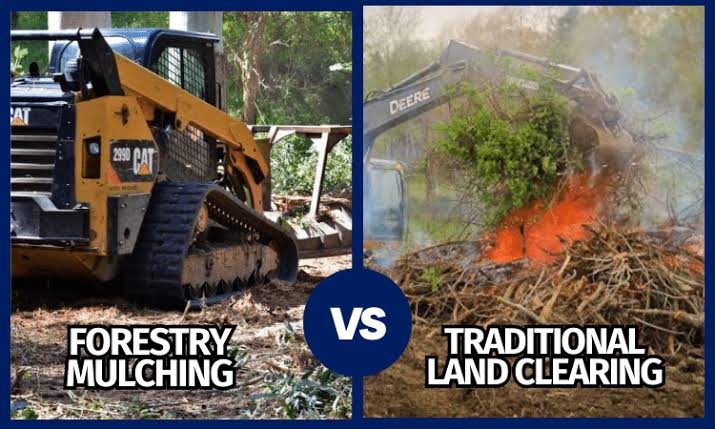
Land management has come a long way from bulldozers and burn piles. Today’s landowners are increasingly turning to forestry mulching as a sustainable, cost-effective, and low-impact alternative to traditional land clearing. While both methods aim to open up property and improve usability, the way they achieve that goal—and the benefits they provide—are quite different.
Whether you’re prepping for development, creating wildlife access, reducing fire risk, or simply reclaiming overgrown acreage, understanding the differences between forestry mulching and conventional clearing can help you make a smarter investment in your land.
Companies like God’s Country Land Services are seeing a rise in demand for mulching because it aligns with what modern landowners need: speed, efficiency, and environmental responsibility. Here’s why this technique stands apart—and why it might be the better option for your next project.
What Is Forestry Mulching?
Forestry mulching is a single-step process that uses specialized machinery—typically a skid steer or compact track loader fitted with a mulching head—to grind brush, trees, and vegetation into a fine mulch. The resulting layer is left on the ground as a protective, nutrient-rich cover.
Unlike traditional land clearing, which often involves multiple steps like cutting, hauling, burning, and grading, forestry mulching completes the task in one pass, leaving the soil undisturbed and ready for regrowth or development.
How It Compares to Traditional Land Clearing
1. Soil Preservation
Traditional clearing methods often involve scraping or bulldozing, which disturbs topsoil, disrupts root systems, and leads to erosion—especially on sloped terrain or in areas with heavy rainfall.
Forestry mulching, by contrast, leaves the soil intact. There’s no root tearing, no grading, and no heavy tire ruts. The organic layer of mulch protects the surface from erosion and helps retain moisture for whatever comes next—whether that’s planting, building, or letting nature take its course.
2. No Hauling or Burning
One of the biggest headaches in traditional tree removal and clearing is the disposal process. Felled trees and brush need to be loaded, hauled, burned, or chipped—each step requiring more equipment, time, and cost.
With forestry mulching, everything is processed on site. The material stays where it falls, eliminating the need for transport or additional labor. This makes the process not only more efficient, but also more affordable for large tracts of land.
3. Improved Land Aesthetics
Mulched areas don’t look like war zones. Unlike conventional clearing, which often leaves bare dirt, stumps, and exposed roots behind, mulched land appears tidy and natural, with a carpet of shredded material that decomposes into the soil over time.
This cleaner finish is ideal for:
- Trails and hunting lanes
- Fence line clearing
- Home sites and buffer zones
- Wildlife habitat restoration
If your goal is to clear land without creating a visual eyesore, forestry mulching is the clear winner.
4. Selective Clearing Capability
One of the unique advantages of forestry mulching is its precision. Operators can target specific trees or vegetation while leaving desirable features intact. This is especially important in managing invasive species, thinning tree stands, or creating habitat diversity.
In traditional land clearing, nuance often takes a back seat to brute force. Bulldozers aren’t known for their subtlety, and smaller or valuable plants can be unintentionally destroyed in the process.
With mulching, you maintain greater control over what stays and what goes.
5. Eco-Friendly and Sustainable
Forestry mulching in Southeast Michigan is widely considered the more environmentally conscious option. Not only does it avoid burning or over-disturbing the land, but it also:
- Returns nutrients to the soil through decomposition
- Reduces the spread of erosion by maintaining ground cover
- Limits disruption to animal habitats
- Requires less fuel and fewer equipment passes
For landowners looking to improve their property without harming the local ecosystem, this method offers a solid middle ground between clearing and conservation.
Ideal Applications for Forestry Mulching
Forestry mulching is incredibly versatile and can be used across a variety of landscapes and land management goals. Some of the most common applications include:
- Underbrush and small tree removal
- Creating firebreaks or defensible space
- Trail and road access cutting
- Reclaiming overgrown fields
- Preparing hunting lanes or food plots
- Clearing utility lines or fence corridors
It’s also a great complement to services like tree trimming and targeted tree removal, particularly when cleaning up storm debris or thinning dense woodland without completely clearing it.
When Traditional Clearing Still Makes Sense
While forestry mulching offers many advantages, there are scenarios where traditional land clearing remains necessary:
- Construction Prep: If you’re installing foundations, utilities, or large-scale infrastructure, full clearing, grading, and stump removal may be required.
- Large Tree Extraction: Mulching is most efficient for smaller trees (typically under 6-8 inches in diameter). Heavier tree removal projects may need cranes or saw crews.
- Lot Reshaping: If you need to significantly regrade or contour the land, mechanical clearing and excavation might be more appropriate.
In many cases, a hybrid approach works best—starting with forestry mulching and using heavier clearing methods only where necessary.
Planning a Project: What to Expect
If you’re considering forestry mulching for your property, here are a few steps to help you get started:
- Assess the land: Walk the property and note problem areas, density, and the types of vegetation.
- Define your goals: Are you thinning, opening space, or prepping for construction?
- Get a professional opinion: A local land service provider can recommend the right approach, equipment, and timeline.
- Schedule by season: While forestry mulching can be done year-round, cooler months often offer better visibility and ground conditions.
Working with a team like God’s Country Land Services ensures your project is handled efficiently and in alignment with your land goals, budget, and environmental concerns.
Conclusion
Forestry mulching is more than a trend—it’s a smarter, more sustainable way to manage land. Unlike traditional land clearing, it supports soil health, minimizes disruption, and leaves your property ready for whatever comes next.
From brush control to trail development and targeted tree removal, mulching gives landowners the control, clarity, and results they need without the mess and complexity of older clearing methods.
God’s Country Land Services encourages property owners to consider forestry mulching as a first choice—not a backup plan. When land is managed with precision and purpose, you don’t just clear space—you create opportunity.