Multiple Ways UX Impacts SEO
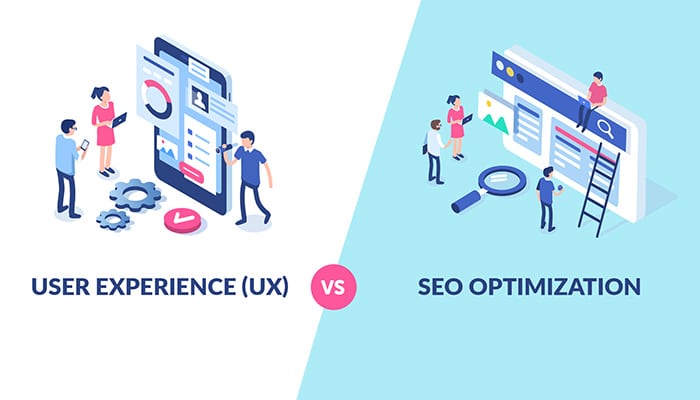
User experience, referred to as UX or Search Engine Optimisation, also known as SEO, remains the two leading buzzwords on the stage within the fast-paced digital marketing brand. Both disciplines are relevant for success in any online business; therefore, it is not simply independent efforts at improving a website but intricately tied to one another. While boosting the visibility of a website on search engine rankings is the art and science of SEO, UX deals with how the website feels, its intuitiveness, and how satisfied visitors are once they engage with the site. Now, in what ways does UX affect SEO services in Melbourne?
Most important in the recent SEO strategies are user-centric metrics, which reflect the deep-seated realisation of search engines and how they rank things that user experience implies. Thus, explicitly put, the UX is at the centre of SEO. User-focused sites will tend to captivate the users, lure them into exploring more content, and entice them to return—things that search engines consider indicative of quality and relevance.
What is User Experience?
The term “user experience” (UX) describes how a person feels about a system, product, or service. It includes all facets of the end-user’s engagement with the business, offerings, and services. Creating user experiences that are simple, effective, fulfilling, and enjoyable overall is the main objective of user experience (UX). The following are some essential elements that make UX:
- Usability: The degree to which new users can easily and intuitively use a product or website and efficiently do their intended tasks.
- Design: Among the visually appealing and functional components of a user interface are its layout, visual design, text, brand, sound, and interaction aspects.
- Accessibility: It is the process of making sure that a product or service can be used by people with a variety of abilities and limitations.
- Desirability: The design elements that provide an aesthetically pleasing and pleasurable experience are often associated with the user’s emotional responses.
- Value: The degree to which the customer thinks the product or service is worthwhile for their time and money.
- Credibility: The extent to which customers think a good or service is trustworthy and legitimate.
It is possible to create designs that are especially appropriate for the target audience by using a variety of research methodologies to understand consumer demands, desires, and behaviours.
Creating interactive features for a product that allow consumers to achieve their goals as efficiently as possible
Information architecture effectively and sustainably structures organises, and categorises content to make it easier for users to access information and finish activities.
Material strategy organises, creates, and oversees written or other media material.
Why is UX Important for SEO?
For several strong reasons, user interface (UI) and user experience (UX) are important components of search engine optimization (SEO). These days, providing a smooth and satisfying user experience is just as important to SEO services in Melbourne as keywords and backlinks. UI/UX are crucial for SEO for the following reasons:
- User Engagement Metrics: As a measure of a website’s quality, search engines look at metrics such as dwell time, bounce rates, and click-through rates. In addition to reducing bounce rates and keeping people interested, a strong user interface and user experience tell search engines that a website is worthwhile and ought to rank higher.
- Mobile Optimisation: A mobile-friendly UI/UX is crucial because most internet traffic originates from mobile devices. Google indexes and ranks content primarily using the mobile version, a practice known as mobile-first indexing.
- Speeds of page loading: Speeding up page loading is essential to enhance user experience. Slow-loading websites provide poorer user experience with a higher bounce rate. They get demoted by search engines, thus lowering their overall rankings.
- High-quality information: Supplying users with helpful information that satisfies their needs and answers their queries is a user experience (UX) element. Relevant and organised information can help increase dwell times and improve rankings.
- Intuitive Navigation and Site Structure: Besides enhancing user experience (UX), an intuitive user interface (UI) that makes it simple for users to locate information also aids search engine crawlers in better indexing the website by comprehending its content hierarchy and site structure.
- Decreased Bounce Rates: Longer site dwell times result from excellent UI/UX. Users who depart fast after visiting give search engines the impression that the information may not be relevant, which might hurt rankings.
Relationship Between UX and SEO
Intuitive architecture and navigation: A logically arranged and easy-to-navigate website offers enhanced user experience (UX) while making life easier for search engine spiders by indexing the site, thus augmenting its ranking. Secure websites, enabled with various features of the algorithm for assisting people with disabilities through HTTPS chapters from time to time, contribute highly to the user experience (UX), and their indicators serve in favour of that search attribute when that same site needs a ranking.
- Interaction Design: SEO services in Melbourne news, like First Input Delay, impact rank by incorporating rotation of these interactive web page aspects with the Core Web Vitals collection of criteria. It’s an example of one piece to a far more extensive puzzle for forming an engaging experience.
- Visual Stability: Users expect that sites must load without sudden layout shifts, which can be frustrating and cause a poor user experience. The CLS indicator, a component of Core Web Vitals, is one factor affecting rankings.
Pogo-sticking, or bounce rate, returns to search results after visiting a page. This can tell search engines that the site may not be the most relevant or pleasant result, which could hurt rankings.
- Behavioural Patterns: User experience (UX) affects how individual people behave on a website. Search engines look at these patterns to see if people find the content useful and use this info to determine rankings.
- Brand Interaction: An enhanced user experience can stimulate brand recognition and loyalty. A user base that is loyal to a brand would be more likely to share and link its materials, creating social signals and backlinks that can, in turn, boost SEO services in Melbourne.
Conclusion
For Online ventures to be successful, User Experience and Search Engine Optimization will have to meet-Crossroads where UX meets SEO is necessary and inevitable. With the evolution of the Web, website content needs to be valid as much as the presentation is user-friendly, cross-platform, and device-compatible.