Speed Is Just a Number: What Makes an Electric Dirt Bike Easier to Control at Higher Speeds?
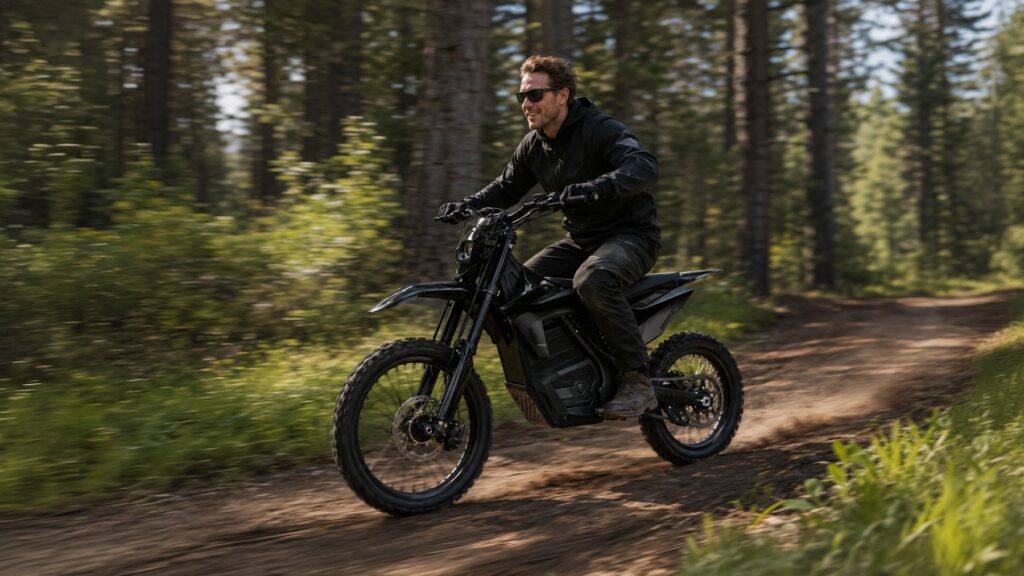
Top speed is one of the most noticeable numbers on an electric dirt bike spec sheet. But once a rider moves onto dirt, gravel, ruts and uneven terrain, speed alone says little about how manageable the bike will feel.
The same pace can feel comfortable on a wide, hard-packed trail and far more demanding on loose rock or a narrow wooded route. As speed rises, there is less time to read the terrain and adjust.
How fast a bike can go and how well that performance translates off-road are two different questions.
Stability Is About Predictable Response
On a flat, straight surface, maintaining stability is generally more straightforward. The real differences appear when the terrain starts changing repeatedly.
Rocks, ruts and uneven ground constantly affect the bike’s movement. A small change may be easy to manage on its own, but when several come in quick succession, the rider has to read both the bike and the route ahead.
Stability does not mean eliminating every movement or isolating the rider from the trail. What matters is whether the bike responds in a reasonably consistent and predictable way.
If each change in the surface produces a sudden or difficult-to-read reaction, more attention has to go toward correcting the line. Clearer feedback leaves more attention available for what is coming next.
That is why off-road stability is difficult to reduce to a single specification.
Braking, Suspension and Traction Work as a System
As the pace increases, braking becomes more demanding, while off-road traction remains highly variable.
Hard-packed dirt, loose gravel, mud and downhill sections can all change how a bike responds under braking. When evaluating an electric motorcycle, braking performance involves more than calipers or rotor size. Tire grip, surface conditions, bike movement and rider input all affect what happens in practice.
A more useful question is whether the bike continues to provide clear feedback while slowing and whether the terrain provides enough room to reduce speed.
Suspension deals with another part of the same challenge. Trails rarely present one obstacle at a time. A rut may be followed by rocks, a dip or another uneven section. As these features arrive more quickly, the suspension must continue managing compression and rebound while repeated impacts influence the bike’s movement.
Its job is not to make the trail disappear. Suspension helps control bike movement and supports a more predictable response across changing terrain.
Motor power and braking forces ultimately reach the ground through the tires, while suspension influences how the bike responds as those tires move across uneven terrain. Loose gravel, wet mud and other low-grip surfaces cannot support the same drive, braking or cornering forces as firmer ground.
The amount of speed and power that can actually be used therefore still depends on terrain, available grip and rider experience. A higher performance ceiling does not change the physical limits of the ground underneath the bike.
High Output Needs to Be Understood in Context
Power and speed often attract attention first on a high-performance electric dirt bike. But more available performance also makes the rest of the bike more relevant.
If a bike can build speed quickly, the rider needs enough room to recognize surface changes, slow when necessary and understand how the bike is responding. Once the trail becomes rocky, uneven or filled with tighter turns, a power figure alone cannot describe how manageable the bike will feel.
The X7 Spark, for example, is a fast electric dirt bike with a 12,000W peak mid-drive motor. That figure becomes more useful when viewed alongside bike size, tires, suspension, braking and rider experience rather than as a stand-alone measure of off-road control.
Higher output increases the performance available to the rider, but it does not remove the challenges created by terrain.
For an off-road model from Qronge, power figures are only one part of the overall capability. On a real trail, how the bike reacts when the surface changes and whether those reactions remain clear enough for the rider to understand matter as well.
More available power and more usable performance are not always the same thing.
Rider and Bike Fit Matter Too
The same bike can demand different levels of effort and adaptation from riders with different builds and experience levels.
Bike dimensions, rider height, standing posture and reach to the controls all affect how naturally someone can move with the machine. That becomes more noticeable on uneven terrain, where the rider’s position changes during climbs, descents, slowing and repeated bumps.
If the bike does not fit the rider well, straightforward adjustments may require more effort. A high-performance ceiling does not automatically make a bike easy to control.
Experience also affects how a rider interprets feedback. Less experienced riders may need more time to become familiar with how the bike reacts on hard dirt, loose surfaces or repeated uneven terrain.
As those responses become easier to recognize, the available performance becomes easier to use effectively.
Visibility Can Limit the Pace Before the Bike Does
Vehicle capability is only part of what determines a usable pace off-road. Visibility matters just as much.
On wide, open sections, upcoming turns, grades and surface changes can usually be seen earlier. On wooded trails, blind corners or crests, the visible distance ahead may shrink quickly.
At a crest, the rider may see the top of the rise without being able to see the terrain beyond it. Around a blind corner, rocks, ruts, standing water or other trail users may remain hidden until farther into the turn.
For that reason, top speed cannot be separated from sight distance.
If only a short section of trail is visible, the route may not provide enough reaction space to use more speed safely or comfortably.
Dust, low-angle sunlight and changing light through trees can reduce visibility further. What matters is how much time and room remain to recognize a change, slow down or choose a different line.
As that margin gets smaller, higher speed leaves fewer opportunities to respond to something unexpected.
What Matters Beyond Top Speed Is the Remaining Control Margin
A high-performance electric dirt bike may offer a wider range of speed and power, but not every part of a trail allows all of that performance to be used.
As the pace increases, the room available for slowing down, suspension behavior, tire grip, visibility and rider reaction all become more important. A pace that feels reasonable on one section may no longer make sense once the terrain changes.
A wide hard-packed trail, a loose rocky climb and a series of tight wooded turns create different conditions. They should not be approached as though the same pace is equally suitable everywhere.
In areas where motorized off-road riding is permitted, the practical pace still depends on the route, surface, weather, visibility and rider experience. Performance gives the rider more options, but the terrain determines how many of those options are useful at that moment.
Before focusing on top speed, it is more useful to ask whether the bike remains predictable over uneven terrain, how much room is available for slowing down, how traction is changing, and whether the rider can see far enough ahead to respond.
Those questions are less dramatic than a top-speed figure, but they are closer to what actually determines control off-road.
Top speed tells you what a bike is capable of reaching. What matters on the trail is how much room remains for observation, judgment and correction once speed, terrain, visibility and rider ability all come together.