What Are Forklift Tipping Bins And How Do They Work?
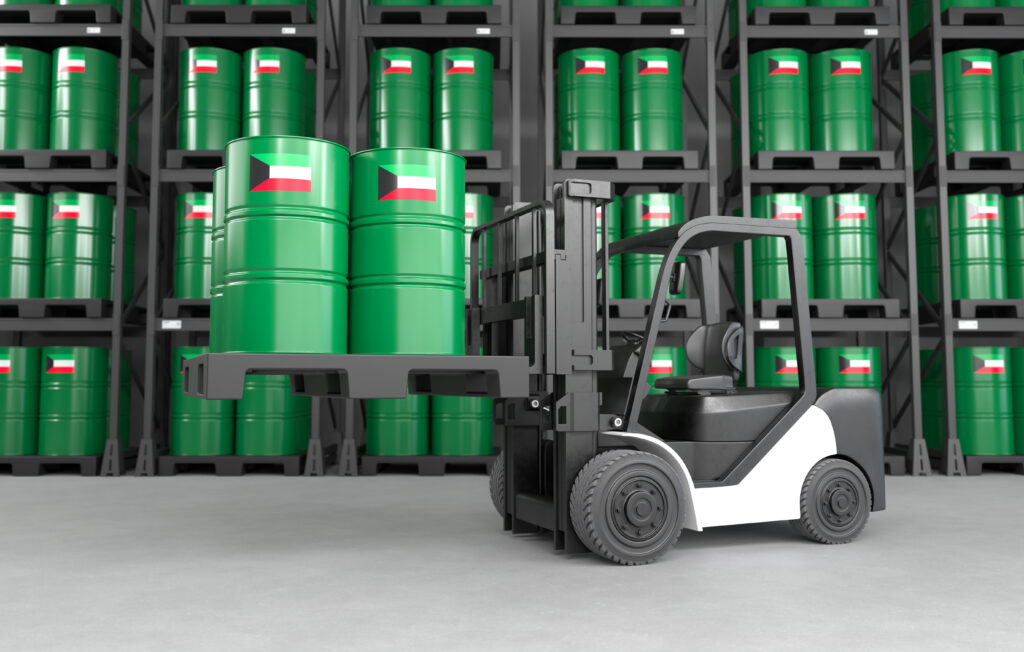
A forklift is lifting oil barrels made in Kuwait in a warehouse. 3D illustration
In many busy warehouses and industrial plants, waste, scrap metal, packaging materials, and production debris can rapidly bog down operations. Stacking trash at work sites makes employees take more time to clear the clutter, relocate large materials, and navigate unsafe areas.
This has a negative effect on productivity and makes manual handling more hazardous. Furthermore, poor waste disposal techniques can lead to wasted time as employees would have to repeatedly move waste using smaller waste bins.
Forklift tipping bins can resolve these issues by making the collection, transportation, and emptying of industrial waste much easier using conventional forklift equipment. They can aid in keeping the workplace cleaner, optimizing workflow, and minimizing physical stress when dealing with waste handling.
This article describes the characteristics of forklift tipping bins, how they operate, and why they are commonly used in industrial settings.
1. Forklift Tipping Bins Are Designed For Ease Of Industrial Waste Management
Waste handling systems in industrial applications must be capable of handling large volumes and coping with the rapid pace of daily operations. Bins that are commonly used in many warehouses and manufacturing plants are not built to efficiently manage large industrial waste.
For instance, the Richmond range of forklift tipping bins enables waste to be collected, moved, and tipped from forklift trucks, to increase the efficiency of the workplace, while minimizing the need for human power.
Likewise, a forklift tipping bin is a strong, steel container that fits easily onto the forklift tines to enable the operator to drag and discharge waste safely without a lot of manual labor. They are typically used in warehouses, workshops, manufacturing facilities, recycling centers, and construction sites.
Forklift tipping bins are not the same as rubbish bins and are designed for the transportation of heavy or bulky materials. Some examples of these include mish-mash metal, timber offcuts, packaging waste, recyclables, and any general industrial waste. Furthermore, numerous models have galvanized steel construction that enhances durability in challenging work environments.
2. The Tipping Mechanism Speeds Up Waste Disposal
A forklift tipping bin’s tipping system is its most critical feature. The operator can use the forklift to unload the waste into a larger skip or disposal area instead of having to manually unload the waste.
The most common tipping bins for forklift trucks are either self-tipping or lever-release. The forklift lifts the bin and tips forward, releasing the contents after the forklift activates the release system. Once emptied, the bin self-resets to its original position or may also be reset easily for continued use.
Thanks to this design, a business can decrease unnecessary labor while increasing the speed at which waste is removed. In addition, operators can sometimes even operate the tipping function from the seat of the forklift.
3. Forklift Tipping Bins Improve Workplace Safety
Heavy materials, debris, and waste buildup are a daily occurrence in many industrial workplaces. For this reason, safe waste handling equipment is a huge part of having an organized worksite.
Forklift tipping bins can minimize manual lifting and repetitive handling activities, which can lead to workplace injuries. Loose waste can be collected in the bin and moved mechanically, using forklift equipment.
Furthermore, these bins assist in maintaining cleaner aisles, loading areas, and production areas. Using a clean work area provides a safer work environment for forklifts and workers, and minimizes trip hazards from waste that can build up.
Some industrial tipping bins also feature sturdier bases, safe forklift pockets, and a heavy-duty chain system for controlled lift and unload.
4. Different Sizes Support Different Operational Needs
Forklift tipping bins are available in several sizes to suit different industries and waste volumes. Smaller bins are useful in compact workshops or lower-volume environments, while larger models support high-capacity industrial operations.
Choosing the correct size depends on factors such as available floor space, forklift capacity, and the type of materials being handled. Larger facilities often benefit from higher-capacity bins because they reduce the frequency of waste collection trips.
Meanwhile, smaller bins may provide better maneuverability in tighter warehouse layouts. As a result, businesses can select equipment that aligns with their workflow and operational requirements.
5. These Bins Support Multiple Industrial Applications
Forklift tipping bins are used across many industries because they provide a flexible waste handling solution. Warehousing operations commonly use them for damaged stock, cardboard, and packaging waste. Manufacturing facilities rely on them for scrap materials, production offcuts, and workshop debris.
Similarly, construction sites use tipping bins for timber waste, rubble, and general cleanup tasks. Recycling facilities also benefit from these bins when sorting and transporting recyclable materials efficiently.
Another advantage is their compatibility with standard forklift equipment already used in many workplaces. Since businesses do not always need specialized machinery, forklift tipping bins can integrate smoothly into existing operations. Consequently, companies can improve waste management without disrupting daily workflow.
Final Thoughts
Forklift tipping bins provide a practical solution for handling industrial waste safely and efficiently. Their forklift-compatible design allows businesses to transport and empty waste quickly while maintaining cleaner and more organized worksites. ‘
Moreover, the tipping mechanism simplifies disposal tasks and helps reduce unnecessary downtime during busy operations. Because these bins are available in multiple sizes and configurations, they can support warehouses, manufacturing facilities, recycling centers, workshops, and construction environments alike.
Durable steel construction also makes them suitable for demanding industrial conditions where reliability matters daily. Ultimately, forklift tipping bins improve workflow, support safer material handling practices, and help businesses manage waste more effectively across industrial environments.